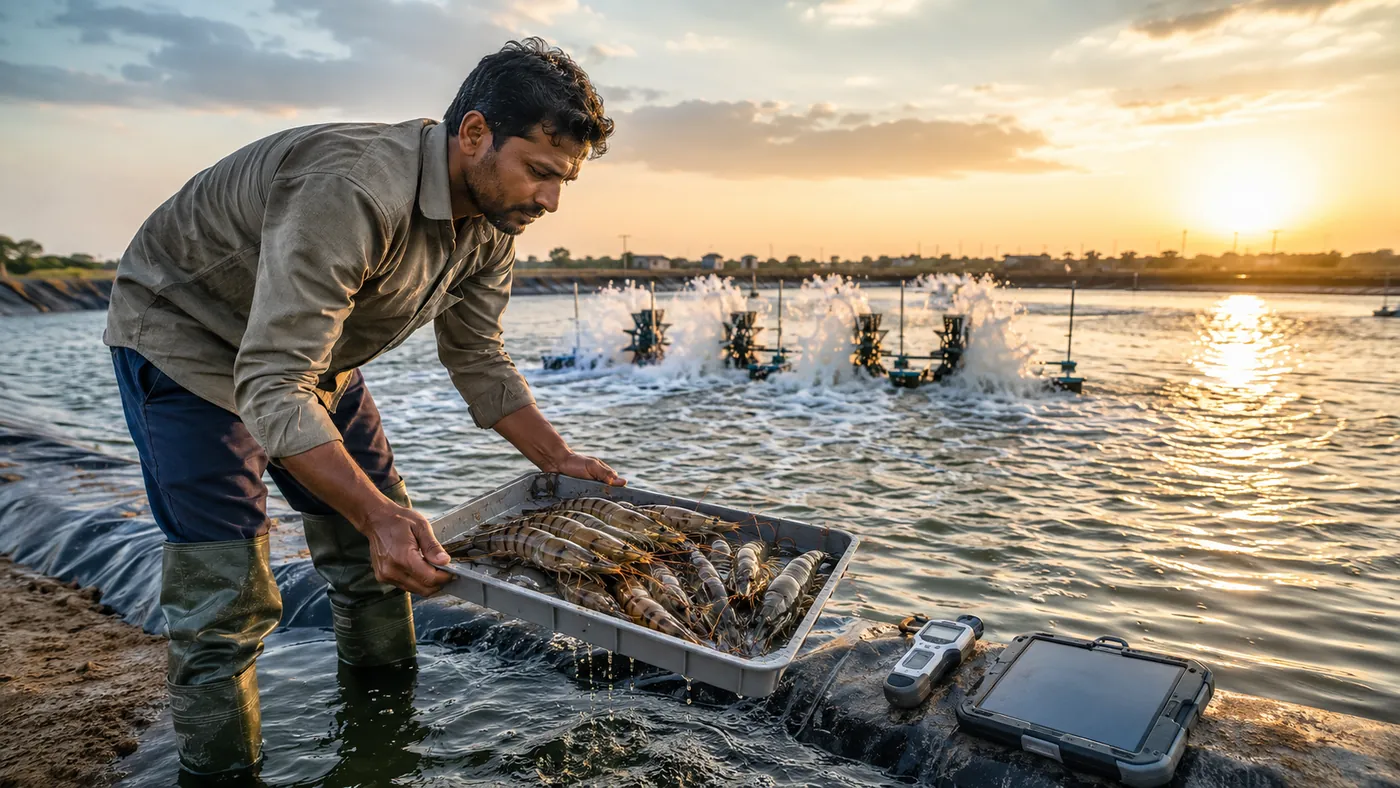
Executive Summary & Key Takeaways
- The global revival of Black Tiger shrimp (Penaeus monodon) in 2026 is driven by genetically improved Specific Pathogen Free (SPF) domesticated broodstock lines that offer rapid growth rates (> 2.5 g/week) and proven resistance to high-salinity osmotic stress.
- Penaeus monodon thrives natively in high-salinity coastal waters (25 to 38 ppt), where its robust osmoregulatory physiology minimizes metabolic energy waste compared to Litopenaeus vannamei.
- Stocking densities must be calibrated moderately (15 to 28 PL/m²) to accommodate the large benthic territory, nocturnal foraging behavior, and deep bottom-dwelling tendencies of adult monodon.
- High-protein (38% to 42% CP) nutritional diets fortified with marine phospholipids, squid liver powder, and cholesterol are mandatory to support intensive molt cycles and maximize growth rates beyond 30 grams.
- Biosecurity systems must focus heavily on physical vector exclusion (fiddler crab fencing, overhead bird monofilament netting, and 150-mesh intake water filtration) to prevent White Spot Syndrome Virus (WSSV) horizontal transmission.
- Reaching 40 to 55-gram jumbo counts (15 to 20-count) unlocks high-value export premium contracts in Japan (HOSO), the EU, and the US, securing farmgate realizations of ₹720 to ₹850/kg.
Field Case Study: 12-Acre High-Salinity Black Tiger SPF Farming
A high-salinity brackishwater enterprise in the Olpad belt shifted 6 earthen ponds from low-margin Vannamei monoculture to Specific Pathogen Free (SPF) Black Tiger (Penaeus monodon) post-larvae. Leveraging high natural salinity (28 to 34 ppt), deep 1.6m water columns, 42% high-protein squid-meal fortified diets, and strict crab/bird biosecurity barriers, the farm produced 19.5 metric tons of premium 20-count jumbo shrimp. Sold at a weighted average farmgate realization of ₹765/kg directly to Japan-certified blast-freezing processors, the enterprise realized a net profit of ₹6,94,000 per hectare—more than doubling their historical Vannamei crop returns.
1. The 2026 Monodon Renaissance: Domesticated SPF Broodstock vs Wild Seed Risks
For over two decades, the global aquaculture industry was dominated by the Pacific White Shrimp (Litopenaeus vannamei). However, intensifying disease pressures (such as EHP microsporidiosis, running mortality, and White Feces Syndrome), coupled with severe global price depression for small-to-medium size counts (40 to 60-count), have crushed commercial profit margins for Indian shrimp producers. In 2026, the Black Tiger shrimp (Penaeus monodon) is experiencing a historic commercial renaissance.
The historical collapse of Black Tiger farming in the late 1990s and 2000s was caused by total dependence on wild-caught broodstock infected with White Spot Syndrome Virus (WSSV), Monodon Baculovirus (MBV), and Infectious Hypodermal and Haematopoietic Necrosis Virus (IHHNV). Today's revival is powered by fully domesticated, multi-generational Specific Pathogen Free (SPF) and Specific Pathogen Resistant (SPR) broodstock lines developed by pioneering genetic breeding programs in Hawaii, Singapore, and India (RGCA/MPEDA).
Modern SPF Black Tiger post-larvae offer predictable linear growth rates exceeding 2.2 to 2.8 grams per week during the linear growth phase (DOC 45 to 110), uniform size distribution (CV < 8%), and high survival rates (> 80%) under controlled biosecure pond conditions. For farmers operating in coastal belts with access to high-salinity seawater, SPF monodon represents an elite high-value diversification engine capable of generating over 60% higher farmgate revenue per harvested kilogram.
SPF Screening & Hatchery Selection Protocols
When procuring Penaeus monodon post-larvae (PL12 to PL15), commercial farmers must enforce strict CAA compliance and demand certified nested RT-PCR screening for 8 major pathogens: WSSV, IHHNV, MBV, HPV, TSV, YHV, EHP, and AHPND (PirAB toxin genes).
Monodon PLs develop slower than vannamei; PL15 post-larvae should measure 12.0 to 14.0 mm in total length with 5 to 6 rostral dorsal spines, full chromatophore branching along the abdominal segments, and a minimum 95% survival rate in a 100 ppm formalin challenge for 30 minutes.
| Biological Parameter | Modern SPF Penaeus monodon | Conventional Litopenaeus vannamei | Commercial Impact |
|---|---|---|---|
| Salinity Tolerance | 25 – 38 ppt (Optimal: 28–34 ppt) | 10 – 25 ppt (Stress above 32 ppt) | Monodon excels in hyper-saline coastal zones |
| Target Harvest Weight | 40 – 55 g (Jumbo 15–20 count) | 22 – 30 g (Medium 35–45 count) | Monodon commands premium luxury export pricing |
| Growth Velocity (DOC 45+) | 2.4 – 2.8 g / week | 1.6 – 2.1 g / week | Rapid weight accumulation at heavy sizes |
| Optimal Stocking Density | 15 – 28 PL / m² | 40 – 70 PL / m² | Lower biomass density reduces disease pressure |
| Farmgate Spot Realization | ₹ 720 – 850 / kg (20-count) | ₹ 440 – 510 / kg (30-count) | + ₹250 to ₹350/kg higher gross realization |
Never buy uncertified 'wild nauplii' or non-SPF seed from unlicensed seed agents. A single uncertified broodstock nauplii batch carrying dormant WSSV or MBV viral loads can wipe out an entire farm cluster within 72 hours of water temperature fluctuation.
2. High-Salinity Dynamics (25 to 38 ppt): Osmoregulation, Gills & Energy Partitioning
Penaeus monodon is an evolutionary marine specialist. While Litopenaeus vannamei expends substantial metabolic energy actively pumping sodium (Na⁺) and chloride (Cl⁻) ions through gill epithelial Na⁺/K⁺-ATPase enzyme complexes in hyper-saline water (salinity > 30 ppt), Black Tiger shrimp naturally maintain isosmotic equilibrium with seawater at 28 to 34 ppt.
In high-salinity coastal environments, monodon directs the vast majority of its ingested dietary energy toward somatic muscle synthesis and protein deposition rather than cellular osmoregulatory respiration. This physiological advantage results in denser muscle fiber compaction, superior post-cook meat texture, and enhanced natural sweet flavor profile (glycine and alanine accumulation).
However, high-salinity pond water presents specific physical challenges: saturated dissolved oxygen (DO) solubility decreases as salinity rises, water density increases, and phytoplankton bloom stability becomes volatile. In 32 ppt salinity seawater at 30°C, the 100% saturation point of dissolved oxygen is only 6.4 ppm (compared to 7.6 ppm in freshwater). Consequently, aeration engineering must be scaled up to ensure morning dissolved oxygen never drops below 4.5 ppm.
Ionic Balance & Molt Hardening in High Salinity
In high-salinity ponds, calcium (Ca²⁺) and magnesium (Mg²⁺) are naturally abundant (Ca > 300 ppm, Mg > 1,100 ppm at 30 ppt). However, post-molt exoskeleton hardening requires balanced bioavailable carbonates and potassium (K⁺).
Maintain total alkalinity strictly between 130 and 160 ppm CaCO3. Broadcast Agricultural Dolomite @ 50 to 75 kg/ha weekly and maintain Potassium Chloride (KCl) @ 30 kg/ha post-molt to ensure smooth ecdysis and prevent cramping in jumbo shrimp.
In high-salinity summer farming (34 to 38 ppt), avoid abrupt freshwater dilution from low-salinity canals during heatwaves. Rapid salinity drops of > 3 ppt within 24 hours trigger uncontrollable soft-shell molting and mass cannibalism among benthic monodon.
3. Biosecurity Master Protocols: Excluding WSSV Vectors, Crab Fencing & Bird Netting
Black Tiger shrimp remain biologically susceptible to White Spot Syndrome Virus (WSSV). While modern SPF genetics provide superior vigor, absolute biosecurity is mandatory to prevent horizontal transmission from wild coastal vectors. The primary transmission vectors in Indian coastal estuaries are wild burrowing mud crabs (Scylla serrata), fiddler crabs (Uca spp.), wild paste shrimp (Acetes spp.), and piscivorous migratory birds.
Install a robust physical crab fencing barrier around the entire perimeter of every pond dyke. Use 0.5 mm thick UV-stabilized virgin HDPE plastic sheets measuring 60 cm in height, burying the lower 15 cm securely into the soil bund and anchoring the top with bamboo pegs. This completely eliminates terrestrial crab migration between infected drainage canals and culture ponds.
Overhead bird scaring monofilament lines (0.8 mm nylon lines spaced 5 meters apart in a grid pattern across the water surface) must be installed prior to stocking. This prevents kingfishers, cormorants, and egrets from dropping semi-digested viral shrimp tissue into healthy ponds.
Water intake biosecurity requires dual-reservoir aging and multi-stage filtration. Intake water pumped from estuarine tidal creeks must pass through a 60-mesh outer cylindrical sieve into a primary settling reservoir, followed by gravity flow through a 100-mesh sock and a 150-mesh monofilament discharge bag into the secondary reservoir. Disinfect reservoir water with active Chlorine Bleaching Powder (35% available chlorine) @ 30 ppm (300 kg/ha-m) or Calcium Hypochlorite (65%) @ 20 ppm, holding the treated water for 7 days with continuous aeration to ensure 100% vector kill and complete chlorine dissipation.
Sludge Fermentation & Probiotic Pre-Conditioning
After zero chlorine residual is verified, condition the water with specialized halophilic (salt-tolerant) Bacillus subtilis, Bacillus licheniformis, and Paracoccus denitrificans strains (minimum 5 × 10⁹ CFU/g) fermented with sugarcane molasses and wheat flour for 24 hours.
This establishes an active probiotic biofilm across the pond benthic interface, outcompeting pathogenic green-colony Vibrio (Vibrio parahaemolyticus and Vibrio harveyi) before post-larval stocking.
Implement foot-dip disinfection troughs containing 200 ppm Potassium Permanganate (KMnO4) and tire-wash washbays at every farm entrance gate. Enforce a strict single-pond tool allocation policy (nets, checktrays, and secchi discs must never be shared across ponds).
4. High-Lipid & Protein Nutrition: Feeding Schedules, Attractants & FCR Optimization
Penaeus monodon possesses a distinct carnivorous digestive physiology compared to the omnivorous Litopenaeus vannamei. Black Tiger shrimp have a shorter gastrointestinal tract, higher proteolytic enzyme activity (pepsin and trypsin), and elevated dietary requirements for essential amino acids (methionine, lysine, arginine) and polyunsaturated fatty acids (EPA, DHA, and cholesterol).
Commence feeding with high-protein (40% to 42% CP, 7% to 9% crude lipid) premium formulated diets containing marine squid meal, fish meal, and krill hydrolysates as natural chemo-attractants. During the nursery and early grow-out phase (DOC 1 to 45), monodon exhibits nocturnal feeding dominance; allocate 60% of the total daily feed ration to late afternoon and night feedings (18:00, 22:00, and 02:00).
From DOC 46 onward, as shrimp surpass 15 grams, transition to 38%–40% crude protein extruded sinking pellets (Pellet #3: 1.8–2.0 mm; Pellet #4: 2.2–2.5 mm). Monodon feeds slowly and deliberately on the pond bottom, masticating pellets over an extended period. Use water-stable feed formulations with a minimum 2.5-hour water stability binder (sodium alginate or modified starch) to prevent nutrient leaching.
Checktray Protocol for Penaeus monodon
Install 4 checktrays (1.0 m² each) per hectare placed 3.0 meters away from the dykes in the darker, deeper zones of the pond. Allocate 1.2% to 1.8% of the total meal ration across the trays.
Checktray lifting intervals must be adjusted to monodon's slower consumption rate: 2.0 hours for 10–20g shrimp, and 1.5 to 1.75 hours for 25–45g jumbo shrimp. If trays are completely clean, increase feed by 4% to 5%. If unconsumed feed remains, cut rations immediately by 15% to 25%.
| Growth Phase (DOC) | Shrimp ABW (g) | Pellet Size (mm) | Crude Protein (%) | Daily Feed % Biomass | Checktray Lift Interval |
|---|---|---|---|---|---|
| DOC 1 – 20 | 0.02 – 2.0 g | Starter Crumble #1 / #2 | 42% CP (High Lipid) | Blind Feeding (1.5–3.0 kg/1L PL) | N/A (Blind Schedule) |
| DOC 21 – 45 | 2.1 – 10.0 g | Pellet #1 / #2 (1.2 – 1.5 mm) | 40% – 42% CP | 5.5% – 3.8% biomass | 2.0 Hours |
| DOC 46 – 75 | 10.1 – 24.0 g | Pellet #3 (1.8 – 2.0 mm) | 38% – 40% CP | 3.6% – 2.6% biomass | 1.75 Hours |
| DOC 76 – 100 | 24.1 – 38.0 g | Pellet #4 (2.2 – 2.4 mm) | 38% CP (Squid Enriched) | 2.5% – 1.9% biomass | 1.5 Hours |
| DOC 101 – 125 | 38.1 – 52.0+ g | Pellet #4 / #5 (2.5 mm) | 36% – 38% CP | 1.8% – 1.4% biomass | 1.25 – 1.5 Hours |
Top-dress daily feed with squid liver oil (20 mL/kg feed) and coated Vitamin C (3 g/kg feed) as an attractant and hepatoprotective booster. Top-dressing significantly accelerates checktray clearance in high-salinity waters.
5. Deep Water Pond Architecture: Benthic Soil Health, Dissolved Oxygen & Sludge Purging
Black Tiger shrimp are strictly benthic, thigmotactic organisms that spend over 90% of their life cycle resting, burrowing, and grazing along the pond bottom substrate. They are intolerant of shallow, warm water columns. Pond engineering for monodon requires a minimum water depth of 1.4 to 1.8 meters to buffer diurnal water temperature swings and prevent light penetration from triggering excessive filamentous bottom algae.
Because monodon culture extends to 110–125 DOC to reach jumbo sizes (40–55g), organic benthic waste accumulation poses a significant hazard. The accumulation of feces, exuviae, and dead plankton creates an anaerobic reducing layer in the soil. If oxidation-reduction potential (ORP / Redox) drops below -150 mV, Desulfovibrio bacteria reduce sulfates into lethal unionized hydrogen sulfide (H2S).
Operate directional paddlewheel aerators (minimum 1.0 HP per 350–400 kg biomass) positioned to generate a synchronized circular vortex current that sweeps bottom detritus continuously into the central pond drain. Maintain dissolved oxygen strictly above 4.5 ppm at the benthic boundary layer (10 cm above sediment) 24 hours a day.
Benthic Remediation & Nitrate Dosing SOP
Execute weekly soil bioremediation by applying specialized sulfur-oxidizing Thiobacillus denitrificans and photosynthetic purple non-sulfur bacteria (Rhodopseudomonas palustris @ 10 L/ha) mixed with dry silica sand broadcast directly over feeding zones.
In ponds lacking central drains, dose Calcium Nitrate (Ca(NO3)2 @ 25–40 kg/ha) every 10 days from DOC 60 onward. Nitrate acts as an alternative electron acceptor, raising benthic Redox potential above +50 mV and preventing hydrogen sulfide generation.
Test bottom soil redox potential (ORP) and pH weekly using a portable spear-tip ORP electrode. If soil pH drops below 7.0 or ORP falls below -100 mV, immediately reduce feed by 30% and broadcast burnt lime (CaO @ 100 kg/ha) across the central waste zone.
6. Jumbo Size Harvesting (15–20 Count), Pigmentation Enhancement & Cold-Chain Realization
The commercial premium of Black Tiger shrimp is governed almost entirely by size counts and visual pigmentation. While 30-count shrimp fetch stable commodity rates, jumbo 15 to 20-count Black Tiger shrimp command luxury export pricing in Japan (for traditional Nobashi and Tempura), the European Union, and the United States, realizing $11.50 to $14.00 per kg FOB.
To achieve the intense dark-blue, black, and orange-banded pigmentation demanded by international buyers, supplement feed rations during DOC 80 to 115 with natural Astaxanthin (from Haematococcus pluvialis microalgae @ 50–75 ppm) or high-grade Spirulina platensis meal @ 2.0% in feed. Black Tiger shrimp reared in high-salinity ponds (30+ ppt) naturally express higher astaxanthin carotenoid deposition in their hypodermis, resulting in a vibrant deep orange-red color upon cooking (Roche SalmoFan score > 28).
Harvesting must be executed with extreme precision to prevent physical damage, broken antennae, or melanosis. Schedule harvests 4 to 8 days following the lunar molt cycle when 100% of the population possesses rock-hard shells. Cease feeding 6 hours prior to harvest. Utilize large-mesh trap nets or gravity sluice gate bag nets at night (22:00 to 05:00) to minimize temperature stress.
Pond-Bank Cold-Shock & Ice-Slurry Depuration
Immediately upon lifting from the pond, submerge live monodon into an insulated stainless-steel tank containing a 1:1:1 ice-to-water-to-shrimp slurry chilled to 0°C to 1°C. Cold-shocking induces instant humane harvest, prevents glycogen depletion, and locks in firm muscle texture.
Add food-grade Sodium Metabisulfite (50 ppm) to the chill bath to inhibit polyphenol oxidase enzymes and prevent melanosis (black spot formation). Pack shrimp into insulated 20-kg HDPE transport crates with alternating layers of flake ice for direct temperature-controlled reefer transport to the export processing plant.
| Export Market Specification | Target Count (pcs/kg) | Average Body Weight (g) | Target Price FOB ($/kg) | Farmgate Realization (₹/kg) |
|---|---|---|---|---|
| Super Jumbo / HOSO (Japan) | 10 – 15 Count | 67 – 100 g | $ 14.50 – 16.50 | ₹ 950 – 1,150 / kg |
| Jumbo HOSO / HLSO (EU/US) | 15 – 20 Count | 50 – 66 g | $ 12.00 – 13.80 | ₹ 780 – 880 / kg |
| Large Export Grade | 21 – 25 Count | 40 – 49 g | $ 9.80 – 11.20 | ₹ 680 – 740 / kg |
| Standard Commercial Grade | 26 – 30 Count | 33 – 39 g | $ 8.20 – 9.00 | ₹ 560 – 620 / kg |
| Domestic / Foodservice | 31 – 40 Count | 25 – 32 g | $ 6.50 – 7.50 | ₹ 460 – 510 / kg |
Never harvest Black Tiger shrimp during bright daytime sunlight or rainstorms. Solar heat accelerates enzymatic spoilage and causes carapace discoloration, while sudden salinity drops trigger premature ecdysis and soft-shell downgrades at the factory gate.
7. Commercial Comparative Economics: Black Tiger vs Vannamei Financial ROI Model
To evaluate the commercial viability of species diversification, below is an authentic financial comparison between a 1.0-hectare semi-intensive Black Tiger SPF crop (stocked at 22 PL/m², harvested at 48g / 20-count at 118 DOC) versus a standard 1.0-hectare Vannamei crop (stocked at 45 PL/m², harvested at 25g / 40-count at 90 DOC).
While Penaeus monodon requires higher initial seed investment and premium 40% CP feed, its moderate stocking density significantly lowers overall seed volume costs and aeration energy demand per crop. Most importantly, the massive farmgate price premium for 20-count Black Tiger (₹765/kg vs ₹410/kg for 40-count Vannamei) transforms farm economics.
A single 1.0-hectare Black Tiger crop yielding 8,930 kg generates a gross revenue of ₹68,31,450 against total operational expenditures (OPEX) of ₹27,45,000, delivering a net farm profit of ₹40,86,450 per crop cycle (ROI > 148%). In comparison, an equivalent Vannamei crop yields a net profit of ₹18,40,000—demonstrating that high-salinity Black Tiger farming delivers over 2.2× higher net financial realization.
Financial ROI & Risk Sensitivity Analysis
The table below outlines the full line-item financial comparison. For coastal farmers with high-salinity seawater access (> 25 ppt) and strong biosecurity fencing, Black Tiger farming provides superior economic insulation against global commodity price crashes.
| Cost / Financial Parameter | Black Tiger SPF (1.0 Ha @ 22 PL/m²) | Vannamei SPF (1.0 Ha @ 45 PL/m²) | Economic Variance |
|---|---|---|---|
| Seed Stocking Volume | 2,20,000 PLs (@ ₹1.10/PL = ₹2.42 L) | 4,50,000 PLs (@ ₹0.40/PL = ₹1.80 L) | Monodon seed cost + ₹62,000 |
| Total Feed Consumed | 11,966 kg (@ ₹105/kg = ₹12.56 L) | 15,187 kg (@ ₹88/kg = ₹13.36 L) | Feed savings + ₹80,000 |
| Electricity & Aeration OPEX | ₹ 3,45,000 (12 HP @ 118 DOC) | ₹ 3,90,000 (18 HP @ 90 DOC) | Aeration savings + ₹45,000 |
| Probiotics, Minerals & Biosecurity | ₹ 2,85,000 | ₹ 2,25,000 | Higher biosecurity + ₹60,000 |
| Labor, Diesel & Miscellaneous | ₹ 6,17,000 | ₹ 5,10,000 | Extended cycle OPEX + ₹1,07,000 |
| Total Operational Cost (OPEX) | ₹ 27,45,000 | ₹ 26,41,000 | + ₹1,04,000 total OPEX |
| Total Harvest Volume | 8,930 kg (48g avg / 20-count) | 10,800 kg (25g avg / 40-count) | - 1,870 kg biomass volume |
| Average Farmgate Realization | ₹ 765 / kg | ₹ 410 / kg | + ₹355 / kg price realization |
| Gross Farm Revenue | ₹ 68,31,450 | ₹ 44,28,000 | + ₹24,03,450 gross revenue |
| Net Farm Profit / Hectare | ₹ 40,86,450 | ₹ 17,87,000 | + ₹22,99,450 net profit (+128%) |
Lock in direct factory procurement purchase contracts through the AquaSangham Export Desk 30 days prior to harvest. Securing advance minimum price guarantees for 20-count jumbo monodon eliminates broker commissions and protects against local spot volatility.
Summary Operational Action Checklist
Frequently Asked Questions
Q: Why is high salinity (25 to 38 ppt) advantageous for Black Tiger shrimp compared to Vannamei?
Penaeus monodon is evolutionarily adapted to high-salinity marine environments where it maintains near-isosmotic equilibrium with seawater (28 to 34 ppt). Unlike Vannamei, which suffers osmoregulatory stress and metabolic energy drain in hyper-saline water, Black Tiger shrimp direct their dietary energy toward rapid muscle protein synthesis, yielding firm texture and superior sweet taste.
Q: What is the recommended stocking density for SPF Black Tiger in commercial earthen ponds?
For semi-intensive commercial earthen ponds equipped with 1.0 HP aeration per 350–400 kg biomass, the recommended stocking density is 15 to 28 post-larvae per square meter (150,000 to 280,000 PL/ha). Stocking below 30 PL/m² provides adequate benthic grazing territory, minimizes aggression, and enables shrimp to reach 45 to 55-gram jumbo sizes within 115 to 125 DOC.
Q: How do I prevent White Spot Syndrome Virus (WSSV) in Black Tiger ponds?
WSSV prevention requires a strict multi-layer biosecurity barrier: 1) Stock only certified SPF post-larvae tested negative by nested RT-PCR, 2) Triple-filter intake water through 150-mesh socks and chlorinate @ 30 ppm, 3) Install 60 cm HDPE crab barriers along dykes to block wild crab vectors, 4) Install overhead bird netting to prevent bird dropped infected tissue, and 5) Maintain dissolved oxygen strictly above 4.5 ppm to avoid stress-induced viral activation.
Q: What feed protein level is required to achieve 50-gram jumbo Black Tiger shrimp?
Black Tiger shrimp require higher dietary protein and lipid levels than Vannamei. Feeds must contain 40% to 42% crude protein and 7% to 9% crude lipid during early grow-out (DOC 1–45), transitioning to 38% to 40% CP during the finishing phase. Diets must be enriched with marine squid meal, fish meal, cholesterol, and phospholipids to support frequent molt cycles at heavy body weights.
AquaSangham Technical Advisory
Marine Shrimp Genetics & Species Diversification Desk
Contributing Senior Technical Writer & Aqua Consultant at AquaSangham.
Recommended Farming Guides
Western Blue Shrimp (Penaeus stylirostris) Intensive Culture: Lessons from New Caledonia
Read Article →Farming TechGreen Tiger Prawn (Penaeus semisulcatus) Culture Protocols for Gulf of Mannar Coastal Ponds
Read Article →Farming TechKuruma Prawn (Penaeus japonicus) Culture in Sandy Substrates: High-Value Export SOP
Read Article →Get Live Farm Advice on AquaSangham Mobile App
Download India's #1 Aquaculture Super App for real-time market prices, precision tools, and community advice.
Download Free Android App