Executive Summary & Key Takeaways
- Live fish transport is the highest-margin segment in Indian freshwater aquaculture: live Rohu, Catla, Pangasius, Tilapia, and Singhi command a 60% to 110% price premium (₹180–₹340/kg) in metropolitan consumer mandis compared to chilled dead fish (₹90–₹130/kg).
- Transit mortality is rarely caused by oxygen starvation alone; the primary invisible killers are respiratory acidosis from dissolved carbon dioxide (>40 mg/L) accumulation, gill epithelial destruction from toxic un-ionized ammonia (NH3 > 0.05 mg/L), and osmoregulatory shock from mucus stripping.
- A mandatory 24-to-36-hour pre-haul fasting window in clean, flow-through conditioning hapas is non-negotiable: it clears the gut, lowers metabolic rate by 45%, and suppresses post-loading ammonia and solid waste excretion by up to 90%.
- Conditioning transport water with crude non-iodized sodium chloride (NaCl) at 3.0 to 5.0 ppt (3–5 kg per 1,000 L) reduces osmoregulatory energy expenditure by 60%, stabilizes gill mucus layers, and competitively blocks lethal nitrite entry into red blood cells.
- Mild metabolic sedation using food-grade emulsified Eugenol (Clove Oil) at 15 to 25 ppm calms excitable fish, reduces physical collision trauma against tank walls, and cuts respiratory oxygen consumption by over 35% without causing loss of equilibrium.
- Never drop unbagged block ice directly into transport tanks: melting commercial ice introduces chlorinated tap water, rapidly dilutes salt buffers, and creates lethal localized thermal shock zones that trigger sudden cardiac failure in transported fish.
Interstate Live Haul Turnaround: Eluru Fish Syndicate Reaches Siliguri Wholesale Mandi with 99.6% Live Survival Across 1,050 km
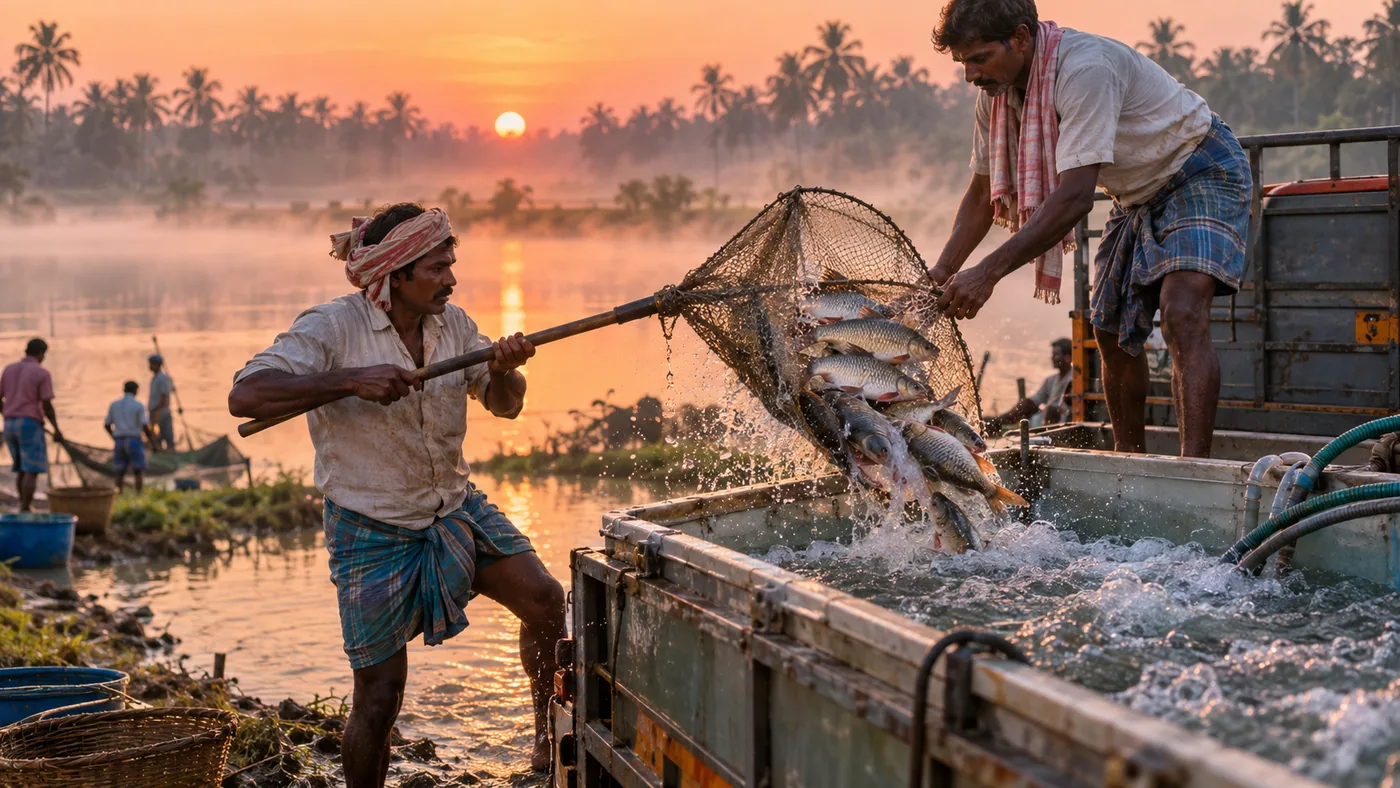
A high-volume commercial fish trading syndicate in the Kolleru Lake aquaculture basin was hauling live Indian Major Carps (Rohu and Catla) and Striped Pangasius 1,050 km along the National Highway 16 corridor to the Siliguri wholesale fish terminal. Operating traditional uninsulated open-top trucks with basic surface aerators, the syndicate suffered catastrophic transit mortalities averaging 28.4% due to uncontrolled daytime water heating (peaking at 33°C), extreme un-ionized ammonia spikes (>1.8 mg/L), and respiratory acidosis caused by carbon dioxide supersaturation. Severely stressed and dead fish had to be dumped onto ice at a punitive 55% mandi markdown (selling at ₹85/kg instead of the ₹195/kg live counter benchmark), erasing ₹2.6 to ₹3.2 Lakhs of gross margin per haul while incurring full diesel and toll expenses. An operational audit conducted by AquaSangham's Live Seafood Logistics Desk restructured their entire logistics architecture: mandating a 30-hour pre-haul starvation and hapa conditioning protocol, introducing a 4.0 ppt non-iodized salt and 18 ppm eugenol bath, retrofitting the truck bed with a 4-compartment polyurethane-insulated (PUF) fiberglass tanker linked to ceramic micro-pore oxygen diffusers, and maintaining transit water strictly at 18°C–20°C with indirect baffle ice cooling. Across 24 subsequent consecutive 7-ton shipments to Siliguri and Guwahati, the syndicate achieved an audited 99.6% live arrival rate, recovering ₹66.7 Lakhs in annualized profits.
1. The High-Stakes Mandi Economics of Live vs Dead Fish Hauling
In the commercial seafood trade across South Asia, nothing commands more immediate financial authority than a live, vigorous fish swimming in a retail display tank. From the Gazipur wholesale terminal in New Delhi and Howrah Wholesale Fish Market in Kolkata, to the bustling consumption hubs of Siliguri, Patna, Ranchi, and Guwahati, urban consumers pay a staggering cash premium for fresh, living finfish. Indian Major Carps (Rohu, Catla, and Mrigal) that fetch a modest ₹110 to ₹135 per kilogram when packed in crushed block ice sell effortlessly for ₹190 to ₹250 per kilogram when sold kicking and alive. For specialty species such as Singhi (Heteropneustes fossilis), Indigenous Magur (Clarias batrachus), Murrel (Channa striata), and live Seabass (Lates calcarifer), live-counter retail prices routinely soar past ₹450 to ₹650 per kilogram.
This price disparity has turned long-distance live fish hauling into one of the most profitable—and simultaneously perilous—specializations in modern agribusiness. A standard 10-wheel transport truck (such as a Tata LPT 2518 or Ashok Leyland 2820) loaded with 6 to 7 metric tons of live Rohu and Catla in the Kolleru Lake aquaculture basin of Andhra Pradesh represents a gross consignment value exceeding ₹12.5 to ₹16.0 Lakhs upon departure. If that truck reaches a terminal mandi in North Bengal or Assam with 99% live survival, the hauling syndicate clears net operational margins ranging between ₹2.2 and ₹3.8 Lakhs per trip after diesel, interstate road permits, toll tariffs, and crew wages.
However, when transport logistics fail, the financial collapse is swift and unforgiving. Unlike shrimp—which can be chilled immediately into slurry ice without catastrophic commercial destruction—a live fish consignment that suffers a 25% to 35% Dead-On-Arrival (DOA) rate suffers an immediate double economic penalty. First, dead fish floating in transit tanks undergo rapid autolysis and bacterial spoilage in warm water, resulting in soft, flaccid flesh, milky eyes, and flared reddish opercula that wholesale commission agents discount by 50% to 65% (often liquidating dead carcasses at a distressed ₹60 to ₹85/kg). Second, the decomposing carcasses rapidly release mucus and putrefactive amines into the closed water volume, accelerating the suffocation of the remaining live fish. In real rupee terms, a 30% DOA incident on a 7-ton truckload destroys between ₹2,20,000 and ₹3,40,000 in immediate cash realization, transforming a high-margin trading run into a crippling financial disaster.
The Live-to-Iced Price Differential Matrix Across Indian Metros
Market data logged across primary Indian wholesale terminals highlights why long-haul transport is expanding rapidly despite infrastructure hurdles. In Delhi's Ghazipur mandi, live Pangasius sells at ₹145–₹160/kg compared to ₹85/kg for iced Andhra fillets, representing an 82% live premium. In Kolkata's Sealdah market, live Catla (2.5 kg+ body weight) commands ₹280/kg versus ₹160/kg for chilled fish, delivering an incremental ₹1,20,000 in gross revenue per ton.
This premium is not merely culinary snobbery; it reflects deep consumer distrust of chemical adulterants. Widespread media exposure regarding illegal formalin (formaldehyde) dipping used by unscrupulous dead-fish traders to prevent ice-melt spoilage has driven middle-class consumers decisively toward live-swimming fish counters, where freshness is 100% guaranteed by biology.
The Freight and Biomass Economics of Water Transport
The fundamental logistical bottleneck of live fish hauling is the payload ratio: you are primarily hauling water, not fish. In traditional, unconditioned open tanks, traders rarely exceed a fish-to-water ratio of 1:4 or 1:5 (meaning 1 kg of fish requires 4 to 5 liters of water to survive a 24-hour journey). This severely penalizes profitability by capping fish biomass at 2.5 to 3.0 tons on a truck capable of carrying 12 tons of gross payload.
By implementing scientific water conditioning, pre-transport metabolic fasting, pure oxygen micro-diffusion, and low-temperature suppression, advanced haulers safely compress the fish-to-water ratio to 1:1.5 or even 1:1.2. This doubles or triples the deliverable live fish biomass per truckload, reducing transport freight cost from ₹28/kg down to ₹11/kg and unlocking immense competitive advantage in destination mandis.
Never negotiate live hauling freight contracts on a gross truck weight basis. Always calculate your logistics margin on 'Net Deliverable Live Kilograms'. A hauler who charges ₹5,000 less for a trip but delivers 8% higher mortality will cost you ₹90,000 more in lost mandi realization.
2. The Fatal Triad of Transit Water: Ammonia, Carbon Dioxide & Osmotic Bleed
To transport finfish across 500 to 1,200 kilometers without mortality, haulers must abandon the naive assumption that fish die during transport simply because 'they ran out of oxygen.' In modern transport vehicles equipped with industrial liquid oxygen (LOX) cylinders or compressed gas cascades, dissolved oxygen (DO) levels inside the transport water are frequently supersaturated, often measuring 12.0 to 18.0 mg/L (150% to 250% saturation). Yet, fish continue to gasp violently at the surface, roll belly-up, and perish in droves. This paradox is explained by the deadly physiological triad: un-ionized ammonia poisoning, respiratory carbon dioxide acidosis, and osmotic shock.
The first lethal factor is nitrogenous waste accumulation. Fish are ammonotelic organisms, excreting over 80% to 90% of their metabolic nitrogen waste as ammonia directly across their gill lamellae into the ambient water column, primarily through passive NH3 diffusion and Na+/NH4+ exchange. In a closed transport tank holding 4,000 kg of fish in 6,000 liters of water, metabolic excretion causes total ammonia nitrogen (TAN) to skyrocket within 8 hours. However, TAN exists in two chemical forms in dynamic equilibrium governed strictly by water pH and temperature: ionized ammonium (NH4+), which is non-toxic and cannot readily penetrate biological membranes, and un-ionized ammonia (NH3), a lethal neurotoxin and gill irritant that rapidly diffuses across the lipid bilayers of gill cells.
At a typical tropical summer transport temperature of 30°C and an unbuffered pH of 8.2, over 11% of the total ammonia converts into un-ionized NH3. Concentrations as low as 0.05 mg/L cause severe gill hyperplasia, cellular swelling, and capillary micro-thrombosis. When NH3 levels breach 0.20 mg/L, the fish can no longer excrete internal metabolic ammonia against the reverse concentration gradient; ammonia accumulates in the blood and brain tissue, triggering convulsions, respiratory paralysis, and catastrophic mortality.
The Carbon Dioxide Trap & The Root-Bohr Acidosis Mechanism
The second invisible killer is carbon dioxide (CO2). As hundreds of kilograms of fish respire within an enclosed or baffled container, they produce enormous volumes of dissolved carbon dioxide. Free CO2 in transport water rapidly climbs from pond baseline levels of 3–5 mg/L to toxic concentrations exceeding 50 to 90 mg/L within 6 to 10 hours.
Dissolved CO2 hydrolyzes into carbonic acid (H2CO3), which dissociates to release free hydrogen ions, driving water pH downward from 7.8 down to 6.2. While this acidic pH conveniently converts toxic NH3 into harmless NH4+, it inflicts a fatal physiological toll known as the Bohr and Root effects. Severe environmental hypercapnia forces CO2 into the fish's bloodstream, causing acute respiratory acidosis. Under low blood pH, hemoglobin molecules undergo conformational changes that not only reduce their oxygen affinity (Bohr effect) but fundamentally destroy their oxygen-carrying capacity (Root effect). Even if the transport water is saturated with 20 ppm of pure oxygen, the fish's hemoglobin cannot bind the oxygen molecules. The fish suffocates internally despite swimming in oxygen-rich water.
Mucus Stripping, Osmotic Bleed & Bacterial Sepsis
The third factor is mechanical trauma and osmotic exhaustion. During highway transit, road vibration, emergency braking, and centrifugal forces around highway turns cause fish to continuously collide against tank walls and each other. This physical friction scrapes away the delicate external cuticle layer and glycoprotein mucus barrier.
Fish mucus contains lysozymes, antibodies, and specialized mucins that prevent external water from flooding the fish's internal tissues. Once this protective barrier is stripped, freshwater relentlessly rushes into the fish's hyperosmotic body via passive osmosis, while vital internal blood electrolytes (sodium, chloride, calcium) bleed out into the water. The fish must burn vast quantities of ATP energy pumping water out through its kidneys to maintain osmolarity, leading to profound physical exhaustion, lactic acid accumulation, and rapid invasion by opportunistic waterborne pathogens like Aeromonas hydrophila and Flavobacterium columnare.
If your transported fish are gasping at the surface with flared gills despite DO meters showing >10 mg/L, do not increase oxygen flow. Your fish are suffering from CO2 acidosis or ammonia toxicity. Immediately crack open tank ventilation hatches to blow off CO2 gas and dose pure non-iodized salt.
3. Pre-Transport Conditioning Protocol: The 36-Hour Starvation & Hardening SOP
The single most common mistake committed by inexperienced fish traders is netting fish directly out of a commercial grow-out pond and dumping them straight into transport containers. A fish netted from a green-water pond has a digestive tract packed with commercial pelleted feed, plankton, and benthic detritus. Under the intense acute stress of netting and handling, the fish's sympathetic nervous system triggers massive adrenaline release, inducing immediate gastrointestinal evacuation. Within 90 minutes of loading, the transport water becomes a foul soup of semi-digested faeces, regurgitated feed pellets, and decaying organic solids.
These suspended organic solids create a catastrophic biological chain reaction. Bacterial blooms explode exponentially within the warm transport water, consuming dissolved oxygen at terrifying rates and producing biochemical oxygen demand (BOD) that overwhelms aeration diffusers. Furthermore, the enzymatic breakdown of organic matter releases massive pulses of un-ionized ammonia and creates thick, persistent surface protein foam that acts as a physical barrier, preventing carbon dioxide from outgassing into the atmosphere.
To guarantee zero transit mortality, pre-transport conditioning is completely non-negotiable. Conditioning is a 3-phase physiological process comprising gut evacuation (fasting), physical muscle hardening, and thermal metabolic suppression. Professional operations across Andhra Pradesh and West Bengal utilize dedicated cement conditioning cisterns or knotless nylon conditioning hapas installed in clean, deep, aerated water reservoirs with zero plankton scum.
The Starvation Protocol: Calibrating Fasting Windows by Species & Size
Fasting must be strictly calibrated based on species metabolic rate and ambient water temperature. For warm-water Indian Major Carps (Rohu and Catla, 1.0 to 2.5 kg), feed must be completely withdrawn for a minimum of 24 to 36 hours prior to harvest. For smaller fingerlings and table-size Tilapia (400–600 g), an 18-to-24-hour fast is sufficient. For predatory air-breathing catfishes (Singhi, Magur, and Murrel), feeding must cease 48 hours prior to packing to ensure complete evacuation of the stomach and pyloric caeca.
Physiologically, 30 hours of starvation reduces standard metabolic rate (SMR) by 45% to 50%. A fasted fish consumes 40% less dissolved oxygen per hour and excretes 85% to 90% less ammonia compared to a recently fed counterpart. Furthermore, an empty gut eliminates the risk of gut bloat, intestinal rupture, and bacterial enteritis caused by feed fermenting inside the digestive tract during transit.
Hapa Conditioning & Gentle Current Hardening
Harvesting fish from muddy pond bottoms coats their bodies in thick sediment and stimulates excessive stress mucus secretion. Conditioned fish must be transferred into clean knotless nylon hapas (mesh size 6 mm to 10 mm) suspended in a clear, well-aerated reservoir at a density of 30 to 50 kg per cubic meter.
During the first 6 hours in the hapa, gentle water flow or micro-bubble aeration is introduced to create a mild circular current. This stimulates the fish to swim gently against the flow, purging silt and sediment trapped inside the gill chambers and flushing out accumulated muscle lactic acid generated during the harvest struggle. Unconditioned, muddy fish loaded into tanks will clog their own gill lamellae with suspended silt within the first 100 kilometers of road transit.
Never harvest fish for live long-distance hauling during midday heat. Always execute pond harvesting between 3:00 AM and 6:00 AM when ambient water temperatures are at their daily minimum and dissolved oxygen levels in the hapas can be easily buffered with aeration.
4. Water Chemistry Formulation: The 4 Non-Negotiable Chemical Buffers
Transport water should never be plain pond water or raw municipal tap water. Raw pond water contains millions of phytoplankton cells that die off in the dark interior of transport tanks, consuming oxygen and rotting. Municipal tap water contains residual chlorine and chloramines that strip fish gill lamellae within minutes. Professional live fish haulers formulate specialized transport water using clean, aged borewell water enriched with four precise chemical additives designed to maintain osmotic balance, suppress nervous panic, neutralize toxic ammonia, and prevent opportunistic bacterial infection.
The first and most critical chemical additive is pure, non-iodized sodium chloride (crude solar sea salt, NaCl). Freshwater fish maintain an internal blood and extracellular fluid osmolarity equivalent to approximately 9.0 ppt (parts per thousand) salinity. When held in pure freshwater (0 ppt), they must continuously expend up to 30% of their baseline metabolic energy operating ATP-dependent active ion pumps in their gill chloride cells to retain internal sodium and chloride ions while excreting excess incoming water via their kidneys.
By dosing non-iodized salt into the transport water at a concentration of 3.0 to 5.0 ppt (3.0 to 5.0 kg of salt per 1,000 liters of water), haulers narrow the osmotic gradient between the fish's blood and the surrounding water. This slashes osmoregulatory energy expenditure by over 60%, leaving the fish with abundant metabolic reserves to withstand transit stress. Furthermore, environmental chloride ions (Cl-) competitively inhibit the uptake of toxic nitrite (NO2-) through the gill branchial epithelium, completely preventing 'Brown Blood Disease' (methemoglobinemia) if biological filtration falters.
Metabolic Sedation: The Eugenol (Clove Oil) Protocol
Highway transit induces acute psychological and sensory stress: engine vibrations, road ruts, and headlights create continuous panic, causing fish to thrash wildly, bruise their snouts against tank walls, and hyperventilate. To counteract this, commercial operators deploy light chemical sedation (Stage I anesthesia: sedation without loss of equilibrium).
The industry gold standard in India is food-grade Eugenol (the active constituent of Clove Oil, Syzygium aromaticum). Pure clove oil is hydrophobic and will not dissolve in water; it must first be emulsified in 95% food-grade ethanol at a 1:9 ratio (1 part clove oil to 9 parts alcohol). This stock solution is dosed into the transport water at 15 to 25 ppm (15 to 25 mL of pure clove oil per 1,000 liters of water). At this calibrated dosage, fish remain upright and gently responsive, but physical thrashing ceases, swimming activity slows down, and gill ventilation rate drops by 35%, dramatically conserving dissolved oxygen and slashing ammonia output.
Ammonia Sequestration & Antimicrobial Prophylaxis
To capture ammonia excreted during transit, haulers add activated Clinoptilolite Zeolite (a natural microporous aluminosilicate mineral) at 2.0 to 4.0 grams per liter (or suspended in porous mesh filter bags inside the water circulation loop). Zeolite possesses high cation-exchange capacity, selectively trapping ionized ammonium (NH4+) ions within its crystalline lattice and pulling total ammonia down by 60% to 75% over a 24-hour journey.
Finally, to prevent opportunistic pathogens from colonizing skin abrasions and scale loss, the transport water is dosed with medical-grade Methylene Blue at 1.0 to 2.0 ppm (1 to 2 grams per 1,000 L) or Acriflavine at 2.0 ppm. Methylene blue acts as an effective external bactericide and fungicide, while simultaneously functioning as a biological electron donor that reverses nitrite-induced methemoglobinemia, keeping the fish's blood oxygen-carrying capacity fully functional.
Never use cheap table salt from grocery stores for live fish transport. Commercial table salt contains potassium iodate (iodine) and sodium ferrocyanide (anti-caking agent), both of which are acutely toxic to freshwater fish gills. Always procure raw, coarse, unrefined solar sea salt.
5. Closed Bags vs Insulated Tankers: Engineering Specifications & Biomass Ratios
In commercial aquaculture logistics, live fish are transported via two distinct physical systems: Closed Systems (sealed polyethylene bags inflated with medical oxygen and packed inside insulated styrofoam boxes) and Open/Semi-Closed Systems (large fiberglass or stainless-steel tankers mounted on truck chassis with active aeration and liquid oxygen diffusion). Choosing the correct modality depends on transport distance, fish life stage, species value, and total consignment biomass.
Closed plastic bag transport is the standard for high-value seed (fry, fingerlings), valuable broodstock, ornamental fish, and air-breathing carnivores (Murrel, Singhi, and Magur). High-grade virgin low-density polyethylene (LDPE) bags measuring 40 cm x 80 cm with a wall thickness of 80 to 100 microns are utilized. To prevent catastrophic leaks from fin spines puncturing the film, double-bagging (inserting one bag inside another with a sheet of newspaper sandwiched between them) is mandatory. The golden volumetric rule of closed bag packaging is strictly 1/3 pre-conditioned water and 2/3 pure compressed medical oxygen.
For bulk commercial food fish (table-sized Rohu, Catla, Pangasius, and Tilapia weighing 0.8 to 2.5 kg), sealed bags are economically unviable due to high labor and packaging costs. These operations rely on dedicated Live Fish Transport Vehicles (LFTVs). Modern LFTVs feature 3 to 6 independent, baffled, food-grade Fiber Reinforced Plastic (FRP) or stainless-steel (SS 304) tanks insulated with 50 mm to 75 mm of high-density Polyurethane Foam (PUF) to isolate the water from blistering ambient highway heat.
Comparative Engineering Matrix: Closed Bags vs Insulated Tanker Trucks
The following comparative table details the engineering specifications, loading biomass capacities, water chemistry regimes, and operational cost metrics for both transport modalities across 500+ km transit corridors.
| Operational Parameter | Closed Double-Layer Polyethylene Bag | Insulated Multi-Compartment Tanker Truck |
|---|---|---|
| Primary Target Biomass | Fry, Fingerlings (5–15g), Broodstock, Murrel, Singhi | Table Fish (0.8–3.0 kg): Rohu, Catla, Pangasius, Tilapia |
| Container Geometry & Specs | 40 x 80 cm, 90-micron LDPE, styrofoam outer carton | 3 to 5 FRP tanks (1,500L each), 60mm PUF insulation |
| Water-to-Fish Volume Ratio | 1 : 0.25 to 1 : 0.35 (e.g., 6L water per 1.5–2.0 kg fish) | 1 : 0.60 to 1 : 0.85 (e.g., 1,000L water per 600–850 kg fish) |
| Oxygen Delivery Mechanism | Pressurized pure O2 gas (1.5–2.0 bar headspace charge) | Liquid Oxygen (LOX) cryogenic tank + ceramic micro-diffusers |
| Safe Transit Duration Window | 24 to 36 hours (hermetically sealed) | 36 to 48 hours (continuous active monitoring & diffusion) |
| Temperature Regulation | Gel packs / sealed ice bags inside styrofoam box (18°C) | PUF walls + external chilled brine jackets / baffle ice (18°–20°C) |
| Ammonia Control Strategy | Pre-dosed Clinoptilolite Zeolite (3 g/L) + fasting | Continuous filtration loop + partial highway water renewal |
| Transport Cost per Kilogram | ₹35 – ₹55 / kg (high packaging overhead) | ₹11 – ₹16 / kg (bulk commercial economy of scale) |
When filling oxygen bags, never use industrial cutting oxygen from welding shops. Industrial oxygen cylinders often contain hydrocarbon residues and toxic carbon monoxide contaminants. Always demand certified 99.5%+ pure Medical Oxygen (I.P. Grade) from authorized medical gas suppliers.
6. Interstate Highway SOP: The 1,000-km Road Protocol & Emergency Interventions
A perfectly conditioned load of live fish can still suffer 100% mortality if the transport truck is mismanaged on the highway. Long-distance transit across Indian National Highways involves extreme ambient temperature swings (from 16°C at dawn to 42°C at midday), unpredictable traffic bottlenecks, intense road vibrations, and vehicle mechanical breakdowns. The transit crew—comprising an experienced driver and a dedicated live-fish technician—must execute a rigorous checkpoint schedule every 3 to 4 hours throughout the journey.
The primary en-route parameter that dictates survival is water temperature. In tropical aquaculture, water temperature governs fish metabolic rate via the Q10 temperature coefficient: for every 10°C drop in water temperature, fish metabolic rate, oxygen consumption, and ammonia excretion are cut by more than half. Maintaining transport water between 18°C and 20°C keeps tropical species comfortable while suppressing biological activity. However, chilling must be managed with extreme care.
Novice haulers frequently purchase commercial ice blocks from highway ice plants and heave them directly into the fish tanks. This practice is fatal: commercial ice is manufactured from unpurified, highly chlorinated tap water. As the ice melts, chlorine gas dissolves into the water, stripping fish gill lamellae and causing acute chemical suffocation. Furthermore, direct ice dumps create sharp thermal micro-zones (water drops locally to 4°C), shocking nearby fish into cardiac arrest. Chilling must always be achieved indirectly: placing double-bagged ice blocks into dedicated aeration baffle chambers or pumping transport water through an external ice-submerged titanium heat exchange coil.
The 4-Hour Checkpoint Audit & Oxygen Pressure Regulation
At every 4-hour highway stop, the onboard technician must verify three core parameters: dissolved oxygen levels, surface foam accumulation, and water temperature. Dissolved oxygen should remain steadily between 8.0 and 12.0 mg/L. If ceramic micro-pore diffusers become fouled with fish mucus, oxygen transfer efficiency drops precipitously, causing tank DO to sag even while the oxygen regulator indicates normal cylinder pressure.
Technicians must carry a secondary, independent 12V DC heavy-duty diaphragm air blower wired directly to the truck's auxiliary battery bank. If the primary liquid oxygen regulator or diffuser grid malfunctions, the auxiliary blower is engaged immediately to provide vigorous mechanical surface bubbling, keeping the fish alive while repairs are executed.
Surface Foam Elimination & Emergency Water Renewal Protocols
Over extended hauls, sloshing water whips fish mucus and excreted proteins into thick, sticky foam that accumulates on the water surface. This foam layer traps outgassing carbon dioxide, forcing it back into solution and suffocating the fish. Technicians must eliminate foam by adding food-grade silicone-based antifoam emulsion at 2 to 3 ppm (2–3 mL per 1,000 L) or by skimming the surface froth with a fine mesh scoop net.
If transit exceeds 24 hours or ambient traffic delays push ammonia levels above 1.5 mg/L, the crew must execute an Emergency 30% Water Renewal. This can only be performed at pre-mapped waypoint stops equipped with deep, verified borewell water (minimum depth >150 feet) that has been pre-tested for zero chlorine and acceptable pH. Never top up transport tanks from roadside irrigation canals, rivers, or roadside dhabas using chlorinated municipal supply. Immediately after water addition, re-dose salt at 3.0 kg per 1,000 liters of replaced water.
Equip your transport truck with a digital remote multi-probe thermometer and DO sensor installed in the tank with a dashboard display in the driver's cabin. The driver can spot a failing oxygen line or rising temperature instantly without pulling over on high-speed expressways.
7. Destination Mandi Acclimation & Depuration Protocol
Reaching the destination wholesale fish mandi after an 800-kilometer journey does not guarantee commercial victory. The final critical window—the 90 minutes between truck arrival and transferring fish into wholesale holding cisterns—is where uneducated operators lose 10% to 15% of their cargo to acute post-transport delayed mortality.
Fish that have spent 24 to 36 hours inside a transport container have adapted their physiology to a highly specific micro-environment: cool temperature (18°C–20°C), elevated carbon dioxide, accumulated ammonium, and moderate salinity (3–4 ppt). Destination wholesale mandis, by contrast, maintain their holding cisterns at ambient air temperature (often 28°C–32°C) using raw city or shallow borewell water with 0 ppt salinity and high pH (8.0–8.5). Dumping fish directly from the truck tank into the mandi cistern induces severe thermal and osmotic shock: the sudden 10°C temperature jump triggers thermal shock protein collapse, while the sudden surge in pH instantly converts internal blood ammonium into toxic un-ionized ammonia, killing the fish within 30 to 90 minutes of unloading.
Professional live-fish syndicates mandate a 3-step destination unloading protocol: gradual water blending, stepped thermal tempering, and revitalizing salt baths. For closed bags, floating the sealed bags on the surface of the destination tank for 30 to 45 minutes allows internal and external temperatures to equalize at a safe rate of 1°C per 10 minutes before the bag is cut open. For bulk tanker trucks, destination water is slowly pumped into the truck compartments while truck water is simultaneously drained, gradually equalizing temperature, pH, and salinity over a 45-minute acclimation window.
The Mandi Holding Cistern Preparation SOP
Wholesale holding tanks must be thoroughly aerated for at least 2 hours prior to the truck's scheduled arrival, ensuring dissolved oxygen exceeds 7.0 mg/L. Unloading holding cisterns should be pre-salted to 2.0 to 3.0 ppt using raw solar salt to cushion the fish during the initial 24 hours of display.
Water depth in holding tanks should not exceed 60 to 75 cm. Deep water creates high hydrostatic pressure that exhausts fatigued fish, whereas shallow, highly aerated water allows fish to rest comfortably on the clean bottom while regaining muscle glycogen reserves.
Handling and Depuration for Premium Live-Counter Display
Live fish must be transferred from transport tanks using soft, knotless, rubberized dip nets or water-filled transfer slings. Coarse knotted nylon nets scrape off remaining mucus and inflict subcutaneous hemorrhages that turn into unsightly red patches on the fish's flanks, drastically degrading retail appearance and lowering selling price.
Once placed in holding cisterns, fish should undergo a 6-to-12-hour depuration period without feeding. This resting window allows the fish to metabolize residual anesthetic (eugenol), repair minor gill swelling, and regain their vibrant, iridescent coloration and vigorous swimming behavior. Fish that undergo this scientific depuration protocol exhibit zero mortality on the retail display floor and command peak top-tier mandi prices from premium institutional and restaurant buyers.
Never allow mandi laborers to use metal hooks or rough bamboo scoops to grab fish from transport tanks. A single puncture wound will cause the fish to die within hours in the holding tank. Always supply your transport crews with specialized smooth-weave canvas transfer scoops.
Summary Operational Action Checklist
Frequently Asked Questions
Q: Why do transported fish die shortly after arrival even when dissolved oxygen was kept high throughout the trip?
Post-arrival delayed mortality is almost always caused by carbon dioxide acidosis (Root-Bohr effect), un-ionized ammonia toxicity, or sudden thermal/osmotic shock during unloading. High dissolved oxygen cannot save a fish whose blood hemoglobin has been deactivated by low blood pH (caused by accumulated CO2 > 50 mg/L) or whose gill lamellae have been destroyed by un-ionized ammonia (NH3 > 0.05 mg/L). Furthermore, dumping cool transport fish (18°C) directly into warm destination tanks (30°C) triggers sudden thermal shock and acute ammonia conversion in the blood.
Q: Can I use commercial ice blocks bought from highway dhabas or ice factories to cool my live fish transport tank?
No, never add raw commercial ice blocks directly into the fish water. Commercial block ice is manufactured using unpurified municipal or canal water containing high levels of residual chlorine, which chemically burns fish gills within minutes. Additionally, ice melting directly in the tank dilutes your salt buffer and creates freezing micro-zones (4°C) that trigger cardiac arrest. Always place ice blocks inside sealed, leak-proof plastic bags or use an external chilling coil to cool the water indirectly.
Q: How much live fish can I safely load into a 1,000-liter insulated transport tank for a 24-hour journey?
For unconditioned fish with primitive surface aeration, the safe limit is only 150 to 200 kg per 1,000 liters. However, by following AquaSangham's full protocol—30-hour fasting, 4 ppt non-iodized salt, 20 ppm eugenol sedation, 18°C temperature control, and ceramic micro-pore liquid oxygen diffusion—you can safely stock 600 to 800 kg of table-size carps or pangasius per 1,000 liters of water for up to 36 hours with >99% survival.
Q: What is the difference between food-grade clove oil (eugenol) and chemical fish anesthetics like MS-222?
MS-222 (Tricaine Methanesulfonate) is an acidic chemical anesthetic that requires precise buffering with sodium bicarbonate to prevent severe pH drops in soft water; it also carries strict regulatory withdrawal periods in food fish. Food-grade Eugenol (derived from natural clove oil) is widely available, cost-effective across rural India, highly effective at low dosages (15–25 ppm), and provides a wide safety margin for light Stage I sedation without altering water pH. However, it must always be pre-emulsified in 95% food-grade ethanol (1:9) before adding to water.
AquaSangham Market Intelligence
Live Seafood Logistics & Mandi Supply Chain Advisory
Contributing Senior Technical Writer & Aqua Consultant at AquaSangham.
Recommended Farming Guides
The 3 AM Oxygen Trap: Why Fish and Shrimp Die at Dawn (And The 4.0 ppm Rule That Saves Them)
Read Article →Water QualityWhy Sudden Monsoon Rain Wipes Out Shrimp Overnight (And The 30-Minute Emergency Lime Protocol That Saves Your Pond)
Read Article →Market AnalysisEU & US Seafood Traceability Audits: Keeping Digital Farm Logs to Secure ₹15-₹20/kg Premium from Exporters
Read Article →Get Live Farm Advice on AquaSangham Mobile App
Download India's #1 Aquaculture Super App for real-time market prices, precision tools, and community advice.
Download Free Android App