Executive Summary & Key Takeaways
- Pangasius (Pangasianodon hypophthalmus) produces the highest biomass per unit area of any freshwater aquaculture species in India, reliably delivering 35 to 40 metric tons per acre in deep earthen ponds.
- Pond water depth is the fundamental physical multiplier: maintain a minimum water column of 2.0 to 2.5 meters (7 to 8 feet) to provide adequate vertical living space and thermal buffering.
- Stock graded 50g to 80g fingerlings at 25,000 to 30,000 fish per acre; never stock direct nursery fry (<10g) into deep grow-out ponds due to size disparity and bird predation.
- Pangasius possesses a specialized vascularized swim bladder that acts as an accessory air-breathing organ, allowing it to survive low DO (down to 1.5 ppm), though optimal growth requires >3.5 ppm.
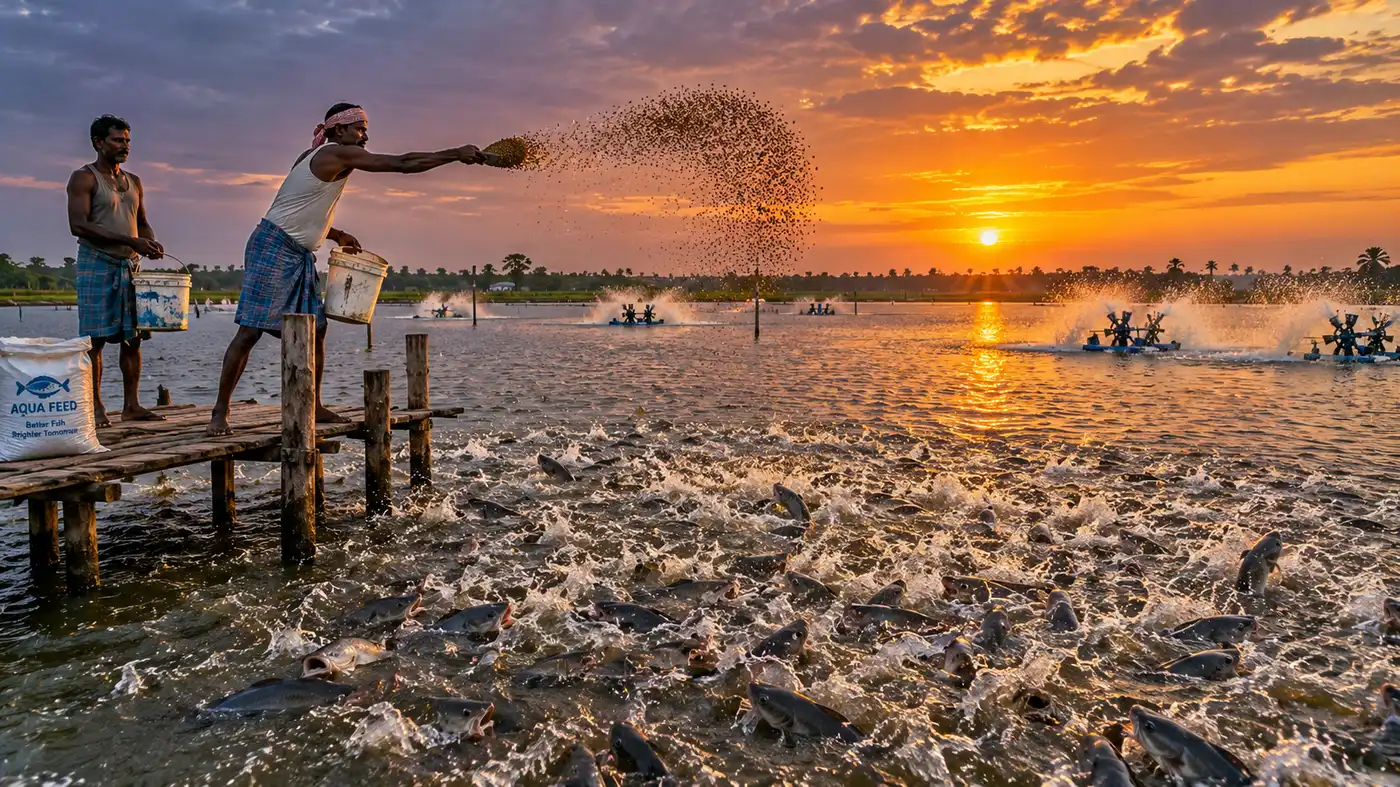
- Eliminate farm-made wet mash feeds; exclusive use of extruded floating pellets (28% down to 24% CP) reduces FCR from 1.8 down to 1.25–1.35, slashing feed costs by 25%.
- Deploy paddlewheel aeration (4 to 6 HP per acre) strategically during night hours (midnight to 06:00 AM) to maintain water circulation and prevent heavy benthic stratification.
- Manage benthic organic loading through scheduled bi-weekly bio-remediation using concentrated Bacillus probiotics and agricultural dolomite to prevent lethal hydrogen sulfide (H2S) build-up.
- Strictly avoid feeds containing unrefined yellow corn, marigold extracts, or high xanthophyll ingredients to preserve export-grade white muscle fillets that command premium wholesale prices.
Commercial Field Case Study: 10-Acre Kolleru Basin High-Density Pangasius Harvest
A seasoned aquaculture enterprise operating ten 1-acre deep earthen ponds (water depth 2.2 meters) converted older low-yield carp ponds into intensive Pangasius culture units. Implementing deep central drainage sumps and 6 HP of long-arm paddlewheel aeration per acre, each pond was stocked with 28,000 graded, vaccinated fingerlings (65g average size). The farm transitioned entirely away from traditional farm-made wet dough feeds to commercial extruded floating pellets (28% CP for the first 60 days, tapering to 25% CP and 24% CP finisher). Aerators were operated primarily during the critical midnight-to-dawn window (00:00 to 06:30 hrs) to supplement the fish's secondary atmospheric breathing. Benthic sludge accumulation was digested through bi-weekly inoculations of fermented multi-strain Bacillus subtilis and Bacillus megaterium probiotics combined with agricultural dolomite. At Day 195, the ponds yielded an average of 39,200 kg per acre of uniform 1.45 kg fish with 96.5% survival and an outstanding FCR of 1.28. Live-hauled to wholesale mandis in Kolkata, Delhi, and Lucknow at an average farmgate price of ₹78/kg against a production cost of ₹53.8/kg, the 10-acre cluster generated ₹3.05 Crores in gross revenue and ₹94.5 Lakhs in net profit.
1. The Biomass Revolution: Why Pangasius Yields 40 Tons/Acre
In the history of global commercial aquaculture, few species have matched the revolutionary trajectory of the striped catfish, Pangasianodon hypophthalmus (commonly designated as Pangasius, Basa, or Tra). Originating from the Mekong and Chao Phraya river basins of Southeast Asia, Pangasius was introduced into Indian aquaculture in the late 1990s and has since established itself as the absolute undisputed titan of inland freshwater fish production.
While traditional Indian Major Carps (Catla, Rohu, and Mrigal) yield between 2.5 to 5.0 metric tons per acre over an extensive 10-to-12-month culture cycle, commercial Pangasius monoculture routinely achieves astonishing yields of 35 to 40 metric tons per acre within a rapid 6-to-7-month (180 to 210-day) turnaround. In intensive production epicenters such as the Kolleru wetland periphery of Andhra Pradesh (spanning West Godavari and Krishna districts), progressive farmers harvest over 80 to 100 metric tons per hectare annually from single earthen ponds.
This extraordinary biological productivity is driven by three distinct physiological advantages: First, Pangasius possesses an exceptionally rapid somatic growth velocity, surging from a 50-gram fingerling to a 1.2–1.5 kilogram market-size fish in under 200 days. Second, it exhibits remarkable omnivorous dietary flexibility, converting low-cost plant proteins and grain carbohydrates with high digestive efficiency. Third, and most crucially, Pangasius is a facultative air-breather equipped with an accessory respiratory organ that enables it to thrive in dense, hyper-crowded standing water where conventional finfish would suffocate within minutes.
However, producing 40,000 kilograms of live finfish in a single acre of water generates an immense metabolic and benthic waste load. Operating at these hyper-yield thresholds without catastrophic fish mortality or meat quality downgrading requires uncompromising adherence to deep-water pond engineering, precision extruded floating nutrition, and proactive microbial water remediation.
Pangasius vs Traditional Carp Production Comparison
1. Annual Yield Multiplier: 35–40 Tons/Acre for Pangasius vs 3.0–4.5 Tons/Acre for Composite Carp culture.
2. Culture Turnaround: 180–210 Days to reach 1.3–1.5 kg market size vs 300–365 Days for Rohu/Catla to reach 1.0–1.2 kg.
3. Stocking Density: 25,000–30,000 fish/acre for Pangasius vs 2,500–3,500 fish/acre for semi-intensive carps.
4. Feed Conversion Efficiency: 1.25–1.35 FCR on extruded pellets vs 1.8–2.2 FCR on sinking farm-made carp mash.
Do not attempt 40-ton/acre Pangasius culture in shallow ponds with less than 1.5 meters of water depth. The massive bioload requires a deep vertical water column to provide adequate space, dilute nitrogenous wastes, and buffer against summer temperature spikes.
2. Pond Civil Engineering: 2.5m Water Depth, Dykes & Sludge Sumps
The structural foundation of a 40-ton Pangasius farm begins with specialized heavy earthwork. Standard 1.0 to 1.2-meter deep carp or shrimp ponds are completely unsuited for high-density catfish culture because the sheer physical biomass (40 tons = ~40,000 individual 1-kg fish) would physically pack the water column, causing severe abrasions, chronic stress, and lethal oxygen crashes.
The Deep-Water Column Requirement: Commercial Pangasius grow-out ponds must be excavated to maintain an operating water depth of strictly 2.0 to 2.5 meters (6.5 to 8.2 feet), with a total dyke height of 3.0 meters to ensure at least 0.5 to 0.7 meters of freeboard above maximum water level. This deep water volume provides three vital functions: it provides adequate vertical swimming layers (Pangasius school in the lower and middle strata while surfacing rhythmically to gulp air), buffers against ambient solar thermal spikes (maintaining cooler, stable bottom temperatures during 40°C Indian summers), and dramatically increases the total dilutional volume per surface acre.
Dyke Dimensions & Soil Compaction: Heavy wave action generated by surface swimming, feeding frenzies, and continuous paddlewheel aeration will rapidly erode weak embankments. Pond dykes must be engineered with a broad crown width of 2.5 to 3.5 meters (wide enough to support small tractors and feed transport vehicles) and a stable slope ratio of 1:2 to 1:2.5 on the wet side. Embankments should be constructed from impervious clay-loam soil compacted in 20cm lifts using heavy vibratory rollers to eliminate seepage.
Central Sludge Collection Sump & Drain Architecture: The pond floor must not be level. Grade the bed with a 1.0% to 1.5% fall directing water towards a deep central drainage sump (or 'monk' sluice pit) measuring 10m × 10m and depressed 0.5 meters below the main floor level. During culture, dense catfish fecal matter, unconsumed feed dust, and mineral sediments migrate into this low point. Installing a submerged 4-inch or 6-inch sludge extraction siphon pipe coupled to a high-volume dewatering pump allows farm operators to purge heavy anaerobic sludge from the sump apex without draining the pond water column.
Inlet & Outlet Screen Biosecurity: Water intake structures must be equipped with double-layer stainless steel mesh screens (40-mesh outer, 60-mesh inner) to exclude wild predatory fish (such as Channa, Wallago attu, and Heteropneustes fossilis) and wild vector snails that introduce trematode parasites. Drainage outlets must feature sturdy galvanized iron bar racks to prevent powerful adult catfish from escaping during monsoon overflow conditions.
| Pond Engineering Parameter | Standard Semi-Intensive Carp Pond | High-Yield Pangasius Blueprint Pond | Engineering Justification |
|---|---|---|---|
| Operating Water Depth | 1.0 – 1.2 meters (3.5 – 4.0 ft) | 2.0 – 2.5 meters (6.5 – 8.2 ft) | Provides vertical volume to support 40 tons/acre biomass |
| Dyke Crown Width | 1.5 – 2.0 meters | 2.5 – 3.5 meters | Accommodates heavy feed transport trucks and harvesting machinery |
| Wet-Side Slope Ratio | 1:1.5 slope | 1:2.0 to 1:2.5 slope | Prevents wave erosion caused by 30,000 schooling catfish |
| Bottom Grading Profile | Flat / Minimal slope | 1.0% fall to deep central sump | Harnesses gravity to concentrate anaerobic fecal sludge |
| Pond Unit Size | 2.0 – 5.0 acres | 1.0 – 2.0 acres | Smaller units enable precise feed management and rapid harvesting |
| Freeboard Clearance | 0.3 meters | 0.6 – 0.8 meters | Prevents fish from jumping embankments during nocturnal feeding |
Before filling new earthen ponds, execute thorough soil compaction and apply agricultural quicklime (CaO @ 500 kg/acre) across the dry bed. Quicklime sanitizes wild pathogen cysts and hardens the clay floor, preventing catfish from excavating deep mud burrows along the dykes.
3. Fingerling Staging: Grading 50–80g Seed & Stocking 28,000/Acre
The single greatest operational error made by novice Pangasius farmers is purchasing tiny nursery fry (0.5g to 5g size) and stocking them directly into deep 2.5-meter grow-out ponds. In a vast, deep body of water, micro-fry suffer immense predation from aquatic insects and wild birds, struggle to locate broadcast floating feed, and experience catastrophic size disparity where fast-growing 'shooters' aggressively cannibalize smaller cohort members, dropping survival below 50%.
The Two-Stage Commercial Production Protocol:
Stage 1: Dedicated Nursery Staging (30 to 45 Days): Sourced fry (1.0g to 2.0g) are stocked into shallow nursery ponds (1.0m depth) or floating hapa nets at high densities: 100,000 to 150,000 fry per acre. Fry are fed high-protein extruded micro-crumbles (32% to 35% CP, size 0.8mm to 1.5mm) 4 times daily. At Day 40, nursery ponds are netted, and fingerlings undergo mandatory mechanical bar grading. Only uniform fingerlings that have attained 50 to 80 grams in body weight and 12 to 15 cm in total length are selected for grow-out stocking.
Stage 2: Grow-Out Stocking Density & Acclimation: The optimal commercial stocking density for achieving 35 to 40 tons per acre is strictly 25,000 to 30,000 graded fingerlings (50g–80g size) per acre (equivalent to 6 to 7.5 fish per square meter). Accounting for an expected 92% to 95% grow-out survival, stocking 28,000 fingerlings will harvest approximately 26,000 to 26,600 mature fish averaging 1.45 kg, yielding exactly 38,500 kg (38.5 metric tons) per acre.
Biosecure Seed Transport & Stocking SOP:
- Transport fingerlings in dedicated live-hauling trucks equipped with liquid oxygen diffusers and ice-insulated tanks, maintaining water temperature at 22°C to 24°C to reduce metabolic respiration and ammonia excretion during transit.
- Salt & Anti-Stress Priming: Add solar sea salt (@ 3.0 kg per 1,000 liters of transport water) and Vitamin C (@ 200 mg/L) to the hauling tanks to stabilize osmotic balance and prevent handling shock.
- Thermal Acclimation: Upon arrival at the farm, float the transport hapas or blend pond water into the transport tanks gradually over 45 minutes until the temperature differential is less than 1.0°C and pH differential is less than 0.3 units before release.
- Prophylactic Seed Dip: Dip incoming fingerlings in a potassium permanganate bath (KMnO4 @ 5.0 ppm) or povidone-iodine bath (20 ppm) for 60 to 90 seconds prior to pond stocking to eradicate external monogenean flukes (Dactylogyrus) and protozoans (Trichodina).
Never stock mixed-size fingerlings. A size variance of just 20 grams at stocking (e.g. mixing 40g and 60g fish) magnifies exponentially over 180 days, resulting in a fractured harvest where 30% of fish are oversized (>1.8 kg) while 40% are stunted (<1.0 kg), destroying commercial pack-out value.
4. Air-Breathing Physiology & Nocturnal Aeration Hydrodynamics
Understanding the respiratory biology of Pangasianodon hypophthalmus is critical to managing high-density ponds. Unlike carps and tilapia that rely entirely on branchial gill respiration, Pangasius possesses a highly specialized anatomical adaptation: a vascularized, highly cellularized swim bladder that functions as an auxiliary aerial lung.
When water dissolved oxygen (DO) levels drop below 3.0 mg/L, Pangasius switches from aquatic gill respiration to facultative atmospheric air-breathing. The fish swim rapidly to the surface, break the surface tension, gulp atmospheric air into the vascularized swim bladder, and submerge. Highly dense capillary networks within the swim bladder wall absorb oxygen directly into the bloodstream while expelling carbon dioxide. This unique adaptation allows Pangasius to survive in stagnant water where DO plummets to 1.5 ppm or even 1.0 ppm—levels that would instantly kill carps, seabass, or trout.
The Myth of 'Zero Aeration' Pangasius Culture: Because Pangasius can survive hypoxia by air-breathing, many novice farmers assume that mechanical aeration is unnecessary. This is an economically disastrous misconception. When forced to rely primarily on atmospheric gulping in low-DO water, fish expend up to 20% to 25% of their total daily metabolic energy budget simply swimming up and down to the surface thousands of times a day. Consequently, voluntary feed intake collapses, growth rates drop by 35%, and Feed Conversion Ratio (FCR) deteriorates from 1.30 up to 1.85. Furthermore, chronic hypoxia suppresses immune phagocytosis, triggering catastrophic bacterial outbreaks.
The Nocturnal Aeration Protocol: For a 40-ton/acre target yield, install 4 to 6 Horsepower (HP) of long-arm paddlewheel aerators per acre (typically two 2-HP or three 2-HP electric units). Aeration must be operated on a strategic diurnal schedule:
- Daytime (08:00 to 22:00 hrs): Natural phytoplankton photosynthesis generates abundant dissolved oxygen in the upper water column; aerators remain OFF to conserve electricity, except for 30 minutes before feeding to circulate water.
- Critical Midnight Window (00:00 to 06:30 hrs): Algal respiration and immense fish biomass consume DO, causing sharp predawn sags. All paddlewheel aerators must operate continuously from midnight until 30 minutes after sunrise, maintaining ambient DO strictly above 3.5 to 4.0 mg/L.
- Directional Placement: Position paddlewheel aerators in the corners, oriented to drive a circular vortex current around the pond perimeter. This current sweeps heavy organic feces into the central drainage sump while concentrating clear, oxygenated water in the feeding zones.
Install an automated digital timer coupled to an DO sensor on the aerator control panel. Setting aerators to trigger automatically whenever DO dips below 3.5 ppm eliminates human operator error and cuts nighttime electricity expenses by up to 28%.
5. Extruded Nutrition: Protein Step-Down (28% to 24%) & 1.28 FCR
Feed represents 70% to 75% of the total operating expenditure in commercial Pangasius farming. Achieving commercial profitability hinges upon maintaining an exceptional Feed Conversion Ratio (FCR) between 1.25 and 1.35. In historical farming practices, operators fed farm-made wet dough or sinking sinking pellets made from rice bran, slaughterhouse offal, and ground de-oiled cakes. Sinking mash feeds dissolve in the water column within minutes, polluting the pond floor, driving FCR up to 1.8–2.2, and causing extensive fillet yellowing.
Modern high-yield Pangasius aquaculture mandates the exclusive use of scientifically formulated, extruded floating pelleted feeds. Floating pellets remain stable on the water surface for over 45 minutes, allowing farm managers to visually monitor feeding vigor, assess satiation in real time, and eliminate overfeeding waste entirely.
The Protein Step-Down Nutritional Schedule:
Pangasius exhibits decreasing protein requirements as its body weight increases. Commercial feeding programs utilize a 3-tier protein step-down strategy:
Tier 1: Juvenile Starter Phase (50g to 250g ABW): Feed a 28% Crude Protein (CP), 5% lipid floating pellet (size 2.0mm to 3.0mm). At this rapid growth stage, high protein supports skeletal elongation and muscle tissue formation. Feed at 3.5% to 4.0% of standing biomass daily, split into 2 feedings (08:00 and 16:30 hrs).
Tier 2: Mid-Grow-Out Phase (250g to 700g ABW): Feed a 26% Crude Protein, 4% lipid floating pellet (size 4.0mm to 5.0mm). Feed at 2.5% to 3.0% of standing biomass daily, split into 2 feedings.
Tier 3: Final Finishing Phase (700g to Harvest 1.4kg+ ABW): Transition to a 24% Crude Protein, 3.5% to 4.0% lipid floating pellet (size 6.0mm to 8.0mm). Feed at 1.5% to 1.8% of standing biomass daily. Feeding protein levels above 24% during finishing is an expensive waste; the excess dietary nitrogen is not assimilated into muscle and is excreted as toxic ammonia, degrading water quality without accelerating growth.
| Fish Stage | Average Body Weight (g) | Pellet Size (mm) | Crude Protein (%) | Daily Feeding Rate (% Biomass) | Feeding Frequency | Expected 30-Day Weight Gain |
|---|---|---|---|---|---|---|
| Nursery / Staging | 50g – 150g | 2.0 mm (Floating) | 28% CP | 4.0% – 4.5% | Twice daily (08:00 & 16:30) | +100g (Reaches 150g) |
| Early Grow-Out | 150g – 350g | 3.0 mm (Floating) | 28% CP | 3.2% – 3.8% | Twice daily (08:30 & 17:00) | +200g (Reaches 350g) |
| Mid Grow-Out | 350g – 700g | 4.0 – 5.0 mm | 26% CP | 2.5% – 2.8% | Twice daily (08:30 & 17:00) | +350g (Reaches 700g) |
| Late Grow-Out | 700g – 1,100g | 6.0 mm (Floating) | 25% CP | 2.0% – 2.2% | Twice daily (09:00 & 17:30) | +400g (Reaches 1,100g) |
| Final Finishing | 1,100g – 1,500g+ | 8.0 mm (Floating) | 24% CP | 1.4% – 1.6% | Twice daily (09:00 & 17:30) | +400g (Reaches 1,500g) |
Construct floating feeding enclosures using 2-inch PVC pipes anchored 5 meters offshore from the feeding pier. Broadcasting floating pellets inside these rings prevents wind drift and paddlewheel surface currents from washing pellets onto dyke stones where they break down unconsumed.
6. Benthic Sludge Digestion: Bacillus Probiotics & Dolomite Buffering
When 28,000 Pangasius in an acre pond consume over 45 metric tons of commercial feed across a 180-day cycle, they excrete approximately 12 to 15 metric tons of solid fecal organic matter directly onto the pond floor. In conventional ponds, this accumulation forms an anoxic, putrefying black sludge layer 20 to 30 cm deep that generates toxic unionized ammonia (NH3), nitrite (NO2-), and deadly hydrogen sulfide (H2S) gas.
The Probiotic Sludge Digestion Protocol: To prevent bottom poisoning without conducting expensive, biosecurity-risky water exchanges, commercial operators implement the AquaSangham Microbial Bioremediation Regimen:
- Targeted Probiotic Strains: Apply concentrated commercial aquaculture probiotics containing multi-strain spore-forming bacteria: Bacillus subtilis, Bacillus licheniformis, Bacillus megaterium, and Thiobacillus denitrificans. These heterotrophic bacteria secrete powerful extracellular proteases, amylases, and cellulases that digest complex organic fecal proteins and oxidize anaerobic sulfides directly on the soil-water interface.
- Pre-Fermentation Inoculum SOP: For each 1-acre pond, mix 500 grams of multi-strain Bacillus probiotic powder with 5 kg of sugarcane jaggery (or molasses) and 20 liters of clean, aerated pond water in a plastic drum. Aerate the mixture with an air stone for 24 hours until vigorous bubbling and a pleasant sweet-fermented aroma develops. Broadcast this active bacterial inoculum across the pond surface bi-weekly (every 14 days) during sunny mid-morning hours (10:00 AM).
- Benthic Alkalinity & Mineral Buffering: Heterotrophic sludge digestion continuously releases organic acids that deplete water alkalinity. Broadcast agricultural dolomite (CaMg(CO3)2) or agricultural limestone (CaCO3) at a rate of 100 to 150 kg per acre every 15 days. Maintain total alkalinity strictly between 120 and 180 mg/L as CaCO3 and pH between 7.4 and 8.2.
- Ammonia & Nitrite Neutralization: Maintain total ammonia nitrogen (TAN) below 2.0 mg/L (with unionized toxic NH3 strictly < 0.05 mg/L) and nitrite (NO2-) below 0.5 mg/L. If nitrite levels spike due to heavy feeding, broadcast solar sea salt (NaCl @ 250 to 500 kg/acre). Dissolved chloride ions competitively block nitrite absorption across fish gill membranes, completely preventing lethal brown blood disease (methemoglobinemia).
Collect bottom soil samples using a core sampler every 30 days. If the core sediment smells like rotten eggs (hydrogen sulfide) or appears ink-black, immediately double the Bacillus probiotic dosage and increase daytime paddlewheel aeration to inject oxygen into the benthic mud boundary.
7. Disease Defense: Enteric Septicemia of Catfish (ESC) & Parasites
While Pangasius is exceptionally hardy compared to other finfish, the immense stocking densities of 40-ton/acre culture create physiological vulnerability to specific bacterial and parasitic pathogens, particularly during monsoon temperature shifts and winter depressions.
1. Enteric Septicemia of Catfish (ESC / Edwardsiellosis): Causative agent is Edwardsiella ictaluri, a Gram-negative intracellular bacterium that represents the most lethal pathogen in commercial catfish farming. ESC strikes predominantly when water temperatures fluctuate between 22°C and 28°C (during monsoon and post-monsoon transitions).
- Clinical Symptoms: Infected fish exhibit acute anorexia, swimming in erratic spirals or hanging vertically at the surface ('tail-down' position). External signs include petechial hemorrhages around the mouth and eyes, a distinctive pale open ulcer on the top of the skull ('hole-in-the-head' lesion), and protruding bloody anus. Internal necropsy reveals classic white, necrotic, pinpoint foci (1 to 2 mm diameter) scattered across the swollen liver, spleen, and posterior kidney.
- Treatment SOP: Immediately reduce feed by 60%. Incorporate Florfenicol (@ 10 mg/kg fish biomass daily) or Doxycycline Hydrochloride (@ 20 mg/kg biomass daily) coated with refined fish oil onto floating pellets for 10 consecutive days. Observe a strict 15-day withdrawal period prior to harvest.
2. Motile Aeromonas Septicemia (MAS / Red Pest): Caused by Aeromonas hydrophila and Aeromonas veronii. Manifests when water quality deteriorates with high organic loading. Fish exhibit widespread hemorrhagic septicemia, eroded fins with bloody bases, protruding scales (dropsy), and swollen hemorrhagic vent. Controlled via probiotic bio-remediation, reducing feed, and top-dressing feed with oxytetracycline (@ 50 mg/kg biomass) under veterinary guidance.
3. Ectoparasitic Infestations: Pangasius is vulnerable to monogenean gill flukes (Dactylogyrus) and protozoan ciliates (Trichodina and Ichthyophthirius multifiliis / White Spot). Infested fish flash against pond dykes, display pale swollen gills, and exhibit excessive mucus production. Treat ponds with agricultural salt (@ 500 kg/acre) or apply an authorized waterborne treatment of copper sulfate (@ 0.5 to 0.7 ppm, adjusted for water alkalinity) or formalin (@ 15 to 20 ppm) under continuous aeration.
Never apply chemical parasitic treatments during cloudy, rainy weather. Formalin and copper sulfate rapidly kill microalgae blooms, triggering severe overnight oxygen crashes in high-density ponds. Always treat on clear, sunny mornings with all aerators running.
8. Live Harvesting Logistics, CAPEX/OPEX Financials & Feed Calculators
The commercial culmination of high-density Pangasius culture is the harvest and market monetization. In India, Pangasius is marketed through two distinct commercial channels: (1) Live Fish Transport: Hauled in specialized aerated water tankers to major inland metropolitan consumption hubs (Kolkata, Delhi, Lucknow, Patna, Ranchi, and Guwahati) where live catfish commands premium wholesale prices. (2) Iced Fish: Net-harvested, chilled in slurry ice, and transported in insulated reefer trucks to processing plants or regional wet markets.
Pre-Harvest Preparation & Drag-Net Seining SOP:
- Fasting Window: Cease all feeding 48 hours prior to harvest. Fasting empties the digestive tract, preventing regurgitation and fecal fouling in live transport tankers, and improves fillet flesh firmness.
- Partial Dewatering: Lower pond water depth by 40% (from 2.2m down to 1.3m) on the night prior to harvest. Deploy a heavy, multi-ply commercial nylon beach seine net (1.5-inch mesh) with lead sinkers and heavy top floats.
- Dawn Harvest: Execute seining at first light (04:30 to 07:00 AM) while temperatures are cool. Carefully corral fish into the central drain zone, dip them with soft knotless scoop nets, and transfer them into sorting tanks or live-tankers equipped with liquid oxygen aeration (maintaining DO > 10 ppm).
Comprehensive 1-Acre Commercial Financial Model (180-Day Cycle):
CAPEX (Amortized over 5 years): Earthwork, deep dykes, sluice gates, 6 HP paddlewheel aerators, electrical wiring, generator backup, and nets = ₹2.8 Lakhs total (₹56,000 per year / ₹28,000 per crop).
OPEX per 180-Day Crop:
- Fingerlings: 28,000 graded seed (60g size) @ ₹4.50 = ₹1.26 Lakhs.
- Commercial Feed: 49.2 Metric Tons of floating extruded pellets (achieving 1.28 FCR) @ ₹48/kg = ₹23.62 Lakhs.
- Electricity & Diesel Backup: Continuous night aeration and pumping = ₹1.85 Lakhs.
- Probiotics, Dolomite, Lime & Salt: Scheduled water/soil remediation = ₹0.75 Lakhs.
- Labor, Surveillance & Harvesting: Dedicated pond operators and netting crews = ₹1.10 Lakhs.
Total Operating Cost per Acre = ₹28.58 Lakhs.
Revenue & Net Profitability:
Assuming 95% survival, the pond harvests 26,600 fish averaging 1.45 kg, generating 38,570 kg (38.57 Metric Tons) of prime fish. Sold at an average farmgate live-market price of ₹76 per kg, gross revenue equals ₹29.31 Lakhs to ₹30.85 Lakhs (at ₹80/kg). Net operating profit per 1-acre pond ranges from ₹1.50 Lakhs (at ₹74/kg) to over ₹4.50 Lakhs (at ₹85/kg peak season) per 6-month cycle—delivering an extraordinary annual return on investment exceeding 35%.
To eliminate costly overfeeding, calibrate exact protein step-downs, track average daily growth (ADG), and calculate precise aeration HP requirements, commercial operators utilize the AquaSangham Aquaculture Feed & Biomass Calculator—the industry-standard digital engine powering commercial aquaculture enterprises across India.
Schedule your stocking cycle to harvest during the peak winter wedding and festival season (November to February in North and East India). Pangasius farmgate prices routinely surge from ₹70/kg up to ₹84–₹88/kg during these high-demand months, instantly doubling your net profit margin per acre.
Summary Operational Action Checklist
Frequently Asked Questions
Q: Why is water depth so critical for achieving 40 tons per acre in Pangasius farming?
A standard 1.0-meter deep pond contains approximately 4,000 cubic meters of water per acre. Supporting 40,000 kg of fish in that volume equates to 10 kg/m³, which causes extreme crowding and oxygen depletion. By excavating to 2.5 meters depth, water volume expands to 10,000 cubic meters per acre, lowering effective biomass density to a highly manageable 4 kg/m³. This deep water column provides essential vertical living space, buffers against summer heatwaves, and dilutes nitrogenous excretion.
Q: Can Pangasius really survive without paddlewheel aeration?
While Pangasius can survive low DO (down to 1.0–1.5 ppm) by gulping atmospheric air via its vascularized swim bladder, relying on air-breathing severely impairs growth. The constant energy expended swimming to the surface reduces feed intake by 35% and drives FCR from 1.30 up to 1.85. To achieve 40 tons/acre in 180 days with low FCR, mechanical paddlewheel aeration (4 to 6 HP/acre) during night hours is strictly mandatory.
Q: Why should farmers switch from farm-made sinking dough to extruded floating pellets?
Farm-made sinking wet dough (made from rice bran, de-oiled cakes, and fish offal) dissolves in the water column within 10 minutes. Up to 30% of sinking feed is lost into the benthic mud, driving FCR to 1.8–2.2 and producing severe anaerobic sludge. Extruded floating pellets remain intact on the surface for over 45 minutes, allowing farmers to adjust feeding in real time, lock in an exceptional 1.25–1.35 FCR, and keep the pond floor clean.
Q: How do you prevent Enteric Septicemia of Catfish (ESC) in intensive ponds?
ESC (caused by Edwardsiella ictaluri) is prevented by: (1) Sourcing certified disease-free fingerlings, (2) Avoiding handling or grading during monsoon water temperature fluctuations (22°C–28°C), (3) Maintaining DO > 3.5 ppm, and (4) Prophylactically supplementing feed with prebiotic beta-glucans and organic acids. If an outbreak occurs, treat immediately with Florfenicol (@ 10 mg/kg biomass daily) in feed for 10 consecutive days under veterinary supervision.
Q: What causes yellow fillets in Pangasius and how can it be prevented?
Yellow fillets are caused by high levels of dietary carotenoids and xanthophyll pigments found in corn, corn gluten meal, marigold petals, and certain green microalgae blooms. These lipophilic pigments deposit in the fish muscle tissue. To produce premium white fillets, formulate feeds using low-xanthophyll ingredients (wheat flour, soybean meal, rice bran, and de-hulled oilseed meals) and prevent dense blue-green algae blooms through regular probiotic water conditioning.
AquaSangham Technical Advisory
Commercial Finfish & Freshwater Intensive Aquaculture Desk
Contributing Senior Technical Writer & Aqua Consultant at AquaSangham.
Recommended Farming Guides
Total Ammonia Nitrogen (TAN) Mass Balance Math: Sizing Biofilters in Commercial RAS
Read Article →Farming TechThe Recirculating Aquaculture System (RAS) Master Guide: Design, Hydraulics & Mass Balance
Read Article →Farming TechIndigenous Magur (Clarias batrachus) Induced Breeding & Nursery Rearing SOPs
Read Article →Get Live Farm Advice on AquaSangham Mobile App
Download India's #1 Aquaculture Super App for real-time market prices, precision tools, and community advice.
Download Free Android App