Executive Summary & Key Takeaways
- Pond bottom soil acts as a massive metabolic sink during intensive farming, accumulating 30 to 50 tons of wet organic waste per hectare and plunging sediment redox potential (Eh) into deep anaerobic toxicity (-200 to -350 mV).
- Superficial surface drying (3–5 cm crusting) leaves deep sub-soil saturated and anaerobic, allowing latent spores of Enterocytozoon hepatopenaei (EHP) and White Spot Syndrome Virus (WSSV) virions to survive between crops.
- Achieving an optimal cracking depth of 10 to 15 cm is mandatory to allow atmospheric oxygen—which diffuses 10,000 times faster in air than through waterlogged soil—to penetrate the reduced sub-surface strata.
- Direct solar radiant exposure raises dark pond soil temperatures to 52°C–62°C, causing irreversible thermal denaturation of WSSV viral nucleocapsids and triggering premature, non-infectious polar filament discharge in EHP spores.
- Oxygen diffusion converts black, toxic Ferrous Sulfide (FeS) into stable, rust-brown Ferric Hydroxide (Fe(OH)3) and sulfate, restoring sediment redox potential to a healthy positive baseline (+80 to +150 mV).
- In heavy clay or organic-rich ponds, mechanical disc plowing to a depth of 15 to 20 cm inverts sub-surface mud for secondary solarization; however, plowing is strictly contraindicated in Acid Sulfate Soils containing unoxidized pyrite (FeS2).
Field Case Study: 4-Hectare Earthen Farm Soil Rehabilitation
A 4-hectare commercial earthen shrimp farm in Nellore suffered chronic Enterocytozoon hepatopenaei (EHP) microsporidian infections across three consecutive crops, with harvest growth stalling at 14 grams at 85 DOC. Historical farm practice relied on superficial 6-day surface drying before refilling. Under AquaSangham advisory, the farm executed a rigorous 22-day solarization protocol: the pond was drained and sun-baked until deep polygonal fissures achieved an average depth of 13.5 cm across the entire floor. Benthic soil temperature peaked at 58.5°C under intense May sunlight. Following primary desiccation, an agricultural tractor disc-plowed the pond to 18 cm depth, inverting the anaerobic sub-soil clods for an additional 8 days of secondary solarization before rotavating. The farm then applied Agricultural Limestone @ 1,800 kg/ha based on a 1:2.5 slurry test revealing a pH of 5.6. Subsequent pre-stocking core samples tested negative for EHP spores via PCR, and benthic redox was certified at +110 mV. In the following crop, the farm harvested 28.8 tons of healthy 32-gram Vannamei with zero EHP incidence, generating a net profit of ₹28.4 Lakhs.
1. Biophysical Mechanics of Soil Solarization: Pathogen Inactivation
Pond bottom soil is the ecological engine and the primary pathogen reservoir of any earthen aquaculture system. Over the course of an intensive 90 to 120-day shrimp culture cycle, the pond floor acts as a massive metabolic sink. Thousands of kilograms of uneaten high-protein formulated feeds, metabolic fecal casts, molted chitinous exoskeletons, dead planktonic microalgal blooms, and chemical soil conditioners accumulate on the pond bed. In intensive Penaeus vannamei ponds yielding 8 to 12 metric tons per hectare, this biological sludge accumulates at rates exceeding 30 to 50 tons of wet organic waste per crop.
Under the continuous hydrostatic pressure of 1.2 to 1.5 meters of water, dissolved oxygen cannot penetrate more than 2 to 4 millimeters into the benthic sediment. As a result, the pond floor undergoes rapid microbiological and chemical reduction, plunging the sediment redox potential (Eh) from a healthy aerobic positive state (+100 to +200 mV) into a deeply reduced, toxic anaerobic state (-200 to -350 mV). In this reduced, anoxic mud, obligate anaerobic bacteria flourish, utilizing alternative electron acceptors to reduce sulfates into toxic Hydrogen Sulfide gas (H2S), nitrites into un-ionized ammonia (NH3), and organic carbon into methane and volatile organic fatty acids. Simultaneously, pathogenic microorganisms—most notably the hardy chitin-walled spores of Enterocytozoon hepatopenaei (EHP), encapsulated virions of White Spot Syndrome Virus (WSSV), and virulent biofilms of Vibrio parahaemolyticus—embed themselves within the anaerobic matrix, shielded from routine chemical water treatments.
The single most effective, ecologically benign, and cost-efficient mechanism to reverse sediment reduction, purge toxic chemical gases, and permanently destroy latent pathogen reservoirs between crops is Soil Solarization accompanied by Controlled Deep Soil Desiccation and Cracking. However, empirical audits across Indian aquaculture clusters indicate that more than 50% of farm operators truncate pond drying prematurely, refilling ponds after superficial surface drying of only 4 to 6 days. This incomplete desiccation leaves sub-surface pathogen spores completely viable, guarantees toxic H2S release during the subsequent crop, and triggers early-stage running mortality. This master technical guide provides the complete scientific blueprint for earthen pond soil solarization, detailing biophysical thermal kinetics, cracking depth dynamics, redox transformation, mechanical tilling protocols, and liming calibration.
Soil solarization utilizes solar radiant energy, captured by the dark, high-heat-capacity alluvial clay of the pond floor, to elevate soil temperatures into thermal lethal zones while dehydrating microbial and viral cellular structures. When an earthen pond is completely drained and exposed to direct tropical solar irradiance, the dark mineral sediment absorbs solar radiation at wavelengths between 300 and 2,500 nm, converting photons into thermal energy. In major Indian coastal shrimp farming zones—such as Coastal Andhra Pradesh, Gujarat, Tamil Nadu, and Odisha—ambient summer air temperatures of 36°C to 42°C generate soil surface temperatures between 52°C and 62°C under clear solar skies. This thermal surge triggers irreversible denaturation of biological pathogens.
Thermal Lethal Kinetics Across Core Aquaculture Pathogens
1. Thermal Inactivation of White Spot Syndrome Virus (WSSV): WSSV is an enveloped, double-stranded DNA rod-shaped nimavirus. While highly virulent in the water column, the viral envelope is structurally sensitive to heat and desiccation. Laboratory bio-assays demonstrate that exposing moist soil to temperatures above 50°C for 48 hours, or complete air-drying where soil moisture drops below 10%, induces complete structural collapse of the viral nucleocapsid, rendering the virus completely non-infectious.
2. Inactivation of Enterocytozoon hepatopenaei (EHP) Microsporidian Spores: EHP is a spore-forming microsporidian parasite that infects the tubule epithelial cells of the shrimp hepatopancreas. EHP spores are protected by an extraordinarily durable two-layered spore wall: an outer proteinaceous exospore and an inner endospore reinforced with chitin. In moist, cool, shaded soils, EHP spores remain infectious for over a year. However, when exposed to solar radiant temperatures above 55°C combined with severe cuticular dehydration (soil moisture < 8%), the spore wall undergoes thermal warping and micro-fracturing. Crucially, solarization triggers premature or defective polar filament extrusion; once the polar tube discharges in the absence of a host, the spore permanently loses its infectivity.
3. Destruction of Bacterial Biofilms and Viral Vectors: Opportunistic luminous and pathogenic Vibrio species (including AHPND-causing pirAB-bearing V. parahaemolyticus) survive within protective polysaccharide biofilms on moist sediment particles. Intense solar desiccation strips moisture from the biofilm matrix, exposing naked bacterial membranes to ultraviolet-A (UV-A) and ultraviolet-B (UV-B) radiation, inducing free-radical DNA photolysis and achieving a >99.9% reduction in viable benthic Vibrio colony counts. Furthermore, solarization completely desiccates wild crustacean vector eggs, resting copepod cysts, and burrowing mud crabs.
Do not rush pond preparation. In coastal regions experiencing high humidity or coastal fog, solar heating alone may take 18 to 22 days to reach lethal sub-surface temperatures. Use a digital soil probe thermometer with a stainless steel stem to verify that soil temperature at 5 cm depth reaches at least 50°C for a minimum of 4 consecutive afternoon hours.
2. Optimal Cracking Depth & Atmospheric Oxygen Diffusion Physics
A superficial drying of the pond surface—characterized by a pale grey crust merely 2 to 3 cm thick—is completely ineffective for commercial disease prevention. In heavy alluvial and coastal clay soils (which possess clay contents between 35% and 65%), water molecules are held tightly within the microscopic inter-layer lattices of montmorillonite and illite clay minerals.
As evaporation removes moisture from the top 2 cm of soil, the surface contracts rapidly while the sub-surface remains water-saturated. If drying is halted at this stage, capillary water retention ensures that the sub-soil 5 to 20 cm below the surface remains completely anaerobic, pitch black with toxic iron sulfides, and packed with viable pathogen spores.
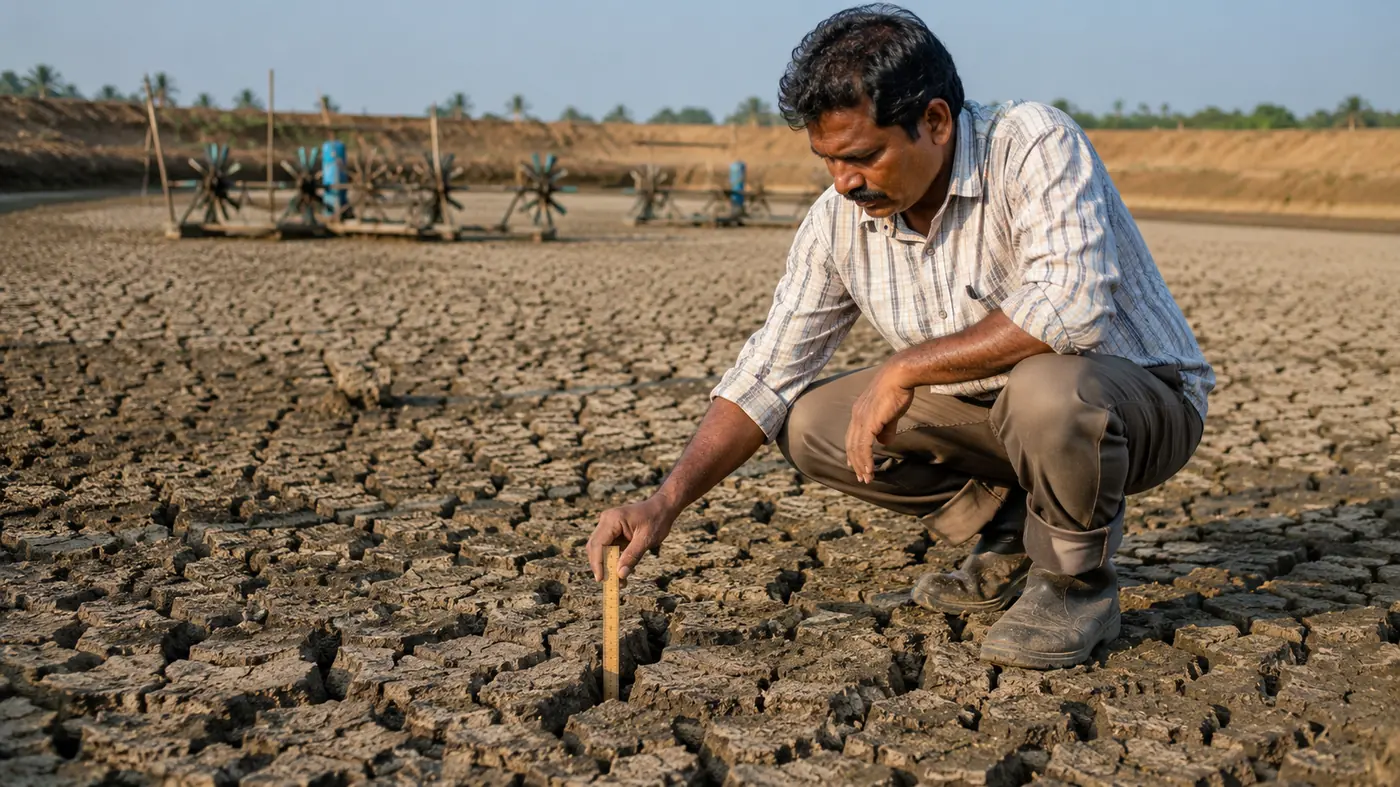
The Physics of Deep Desiccation Cracking: To achieve true sub-surface sterilization, drying must be sustained until deep, volumetric Desiccation Cracking occurs across the entire pond bed. As evaporation continues past Day 7 to 10 of sun exposure, capillary suction forces within the sub-surface clay pores escalate to thousands of kilopascals. When internal tensile stresses exceed the shear strength of the cohesive clay, the soil fractures, forming polygonal desiccation fissures:
- Minimum Critical Cracking Depth: 10 to 15 centimeters (4 to 6 inches).
- Surface Crack Width: 2 to 5 centimeters at the aperture.
- Soil Moisture Benchmark at Full Cracking: 10% to 14% (down from >55% at harvest drain).
Why Cracking Depth is the Master Metric: The formation of 10 to 15 cm deep cracks transforms the pond bed from a flat, two-dimensional impermeable plane into a highly porous, three-dimensional matrix. Atmospheric oxygen—which diffuses 10,000 times faster through air than through water-saturated soil pores—penetrates deep into the bottom fissures. The convective airflow circulating through the deep vertical cracks aerates the reduced sub-surface layers, oxidizing deep organic pockets and exposing burrowed pathogen cysts directly to lethal solar ultraviolet rays and thermal radiation. Without deep cracking, the sub-surface remains an anaerobic bio-hazard.
Inspect the desiccation cracks with a rigid wooden or metal ruler. The cracks must be deep enough that the ruler easily penetrates 10 cm or more without meeting soft, sticky black mud. If the bottom of the crack is still moist and black, continue sun-drying for an additional 5 to 7 days.
3. Soil Redox Potential (Eh) Transformation & Mineral Oxidation
The most critical chemical transformation achieved through soil solarization is the dramatic elevation of sediment Oxidation-Reduction Potential (Redox Potential, Eh). In an operating culture pond, microbial decomposition of organic matter exhausts dissolved oxygen, forcing anaerobic bacteria to utilize alternate electron acceptors according to a strict thermodynamic sequence: Dissolved Oxygen reduction to water (+400 mV to +300 mV), Nitrate reduction to Nitrogen gas (+300 mV to +100 mV), Manganese and Iron reduction to soluble ferrous iron (+100 mV to -100 mV), Sulfate reduction to lethal Hydrogen Sulfide (-100 mV to -250 mV), and Carbon dioxide reduction to Methane (below -250 mV).
At harvest, commercial earthen pond bottoms routinely exhibit redox values between -200 mV and -350 mV. The soil is jet-black, greasy to the touch, and emits a pungent, suffocating rotten-egg odor caused by volatile sulfides. The black coloration is directly attributable to Ferrous Sulfide (FeS), an unstable, reduced mineral compound that acts as a continuous oxygen-sponge upon pond refilling.
The Chemistry of Solar Re-Oxidation: When atmospheric oxygen diffuses into the deep desiccation cracks during solarization, it drives the rapid, spontaneous chemical and microbial oxidation of reduced minerals:
FeS + 2 O2 -> FeSO4 (Ferrous Sulfate)
4 FeSO4 + O2 + 10 H2O -> 4 Fe(OH)3 (Ferric Hydroxide) + 4 H2SO4
In this reaction, the reduced black ferrous iron (Fe2+) is oxidized into stable, insoluble reddish-brown Ferric Hydroxide (Fe3+ / rust-colored iron oxide), while toxic sulfides are irreversibly oxidized into harmless sulfates (SO4 2-). As ferric iron precipitates, the sediment transforms visually from deep jet-black into pale yellowish-brown, tan, or grey.
Field Redox Target: Soil solarization must be maintained until the sediment redox potential, measured at a depth of 5 cm using a portable digital ORP probe fitted with a platinum electrode, shifts from a negative value to a stable positive reading between +80 mV and +150 mV. Achieving positive redox guarantees that all toxic volatile sulfides have been permanently purged.
| Solarization Stage | Soil Moisture (%) | Cracking Depth | Redox Potential (Eh) | Pathogen Viability (WSSV / EHP) | Dominant Iron / Sulfur Chemistry |
|---|---|---|---|---|---|
| Immediate Post-Harvest | 55% – 65% | 0 cm (Waterlogged) | -250 to -350 mV | 100% Viable / Highly Infectious | Ferrous Sulfide (FeS) / Dissolved H2S |
| Early Crust Formation (Day 4–6) | 35% – 45% | 1 – 3 cm (Superficial) | -150 to -250 mV | 95% Viable (Sub-soil protected) | FeS active / Surface Fe2+ oxidation |
| Intermediate Cracking (Day 8–12) | 20% – 28% | 5 – 8 cm (Moderate) | -50 to +30 mV | 40% Viable (Surface inactivated) | Fe(OH)3 forming / Sulfates accumulating |
| Full Desiccation (Day 15–20) | 10% – 14% | 10 – 15 cm (Deep fissures) | +80 to +150 mV | < 0.1% Viable (Complete thermal kill) | Ferric Hydroxide (Fe3+) / Stable Sulfates |
| Post-Tilling & Liming (Day 22+) | < 10% | 15 – 20 cm (Inverted clods) | +120 to +180 mV | 0.0% Viable (Certified Sterilized) | Calcium Carbonate integrated / Neutral |
A simple field test for mineral oxidation: Collect a handful of dry soil from inside a crack and drop it into a clear glass vial with 5% hydrochloric acid. If bubbles of toxic hydrogen sulfide gas emerge with a rotten-egg smell, the soil still contains unoxidized ferrous sulfide and requires further sun-drying.
4. Organic Sludge Mineralization & Aerobic Microbial Succession
In ponds with moderate organic sludge accumulation (organic carbon content between 2.5% and 4.0%), mechanical soil excavation is often economically unfeasible or destructive to dyke integrity. Soil solarization acts as an in-situ biological incinerator, utilizing indigenous aerobic soil bacteria to mineralize organic matter into harmless carbon dioxide, water, and inorganic mineral nutrients.
During the initial 5 to 8 days of drying, as moisture drops into the optimal range of 25% to 35% and atmospheric oxygen infiltrates the top 10 cm, an explosive succession of aerobic heterotrophic bacteria, actinomycetes, and fungi colonizes the sediment. These aerobic microbes synthesize extracellular cellulases, proteases, and chitinases, metabolizing accumulated organic detritus at rates 20 to 30 times faster than anaerobic decomposition:
Organic Matter + O2 -> CO2 + H2O + NH4+ + Energy
Within 15 to 20 days of full solar exposure, the organic carbon content of the pond sediment drops from an unhealthy >3.5% down to an ideal pre-stocking baseline of 1.2% to 1.8%. The soil texture transitions from greasy, sticky anaerobic mud into friable, loose, odorless earth.
Nitrogen Mineralization Dynamics: In an anaerobic pond bottom, nitrogenous wastes accumulate as toxic un-ionized ammonia and nitrite. Aerobic solarization stimulates nitrifying bacteria (Nitrosomonas and Nitrobacter) within the oxygenated soil fissures, converting volatile ammonia into non-toxic nitrate (NO3-). When the pond is subsequently refilled, this residual nitrate serves as an immediate, balanced inorganic fertilizer that triggers clean, stable diatom blooms (Chaetoceros, Skeletonema) without requiring heavy chemical fertilization.
Do not apply synthetic chemical disinfectants directly onto dry cracking soil during solarization. Chemicals like chlorine or formalin kill the beneficial aerobic soil bacteria responsible for mineralizing organic sludge, severely delaying natural soil rehabilitation.
5. Tractor Tilling, Rotavating & Soil Inversion Protocols
Once the pond bottom has undergone initial solarization and achieved the mandatory 10 to 12 cm cracking depth (typically between Day 12 and Day 16 of drying), farm managers must evaluate whether mechanical soil inversion via tractor tilling is required.
When Mechanical Tilling is Mandatory: 1. Ponds with heavy benthic organic loads (>3.0% organic carbon). 2. Ponds that experienced severe disease outbreaks (WSSV, EHP, or Running Mortality Syndrome) during the preceding crop. 3. Heavy clay soils where sub-surface cracking has stalled at less than 8 cm depth.
Mechanical Tilling and Inversion SOP: Equip an agricultural tractor with a heavy-duty disc plow or moldboard plow for primary inversion. Plow to an exact depth of 15 to 20 centimeters. This physically inverts the soil column, bringing deep anaerobic black mud up to the surface while burying the sun-baked, oxidized top layer.
Secondary Solarization Window: Following plowing, the overturned soil clods must be left untouched under direct sunlight for an additional 7 to 10 days. The large overturned clods maximize surface area exposure, allowing solar radiation and wind to oxidize the previously buried sub-surface sediment.
Pulverization (Rotavating): Once the inverted clods have dried thoroughly and turned light brown/grey, run a tractor rotavator to pulverize the clods into fine aggregate particles (2 to 5 mm size). Pulverization ensures intimate contact between soil minerals, applied liming materials, and subsequent pond water.
CRITICAL EXCEPTION: Acid Sulfate Soils (ASS) Warning
In coastal lands developed on mangrove swamps or marine alluvium containing high concentrations of Pyrite (Iron Disulfide, FeS2)—commonly known as Acid Sulfate Soils (ASS), prevalent in parts of Kerala, the Sundarbans of West Bengal, and coastal Gujarat—deep tilling is strictly prohibited.
Plowing exposes unoxidized pyrite to atmospheric oxygen, triggering a violent geochemical reaction: FeS2 + 7/2 O2 + H2O -> Fe2+ + 2 SO4 2- + 2 H+. This oxidation reaction generates massive volumes of pure Sulfuric Acid (H2SO4), causing soil pH to crash catastrophically to 2.5–3.8 and leaching toxic Aluminum (Al3+) and Iron ions into the water upon refilling.
In confirmed acid sulfate soils, farmers must practice shallow surface drying only (cracking depth limited to 5 cm) without mechanical tilling, accompanied by repetitive tidal flushing and heavy liming.
To determine if your pond has Acid Sulfate Soil: Take a soil sample from 15 cm depth, measure its fresh pH, then add a few drops of 30% hydrogen peroxide (H2O2) to simulate rapid oxidation. If the soil effervesces violently and pH crashes below 3.5, you have severe pyrite ASS—never plow this soil!
6. Post-Solarization Liming Protocols & Benthic pH Buffering
Solarization and desiccation frequently release acidic metabolic byproducts through the oxidation of organic sulfur and ammonium. Consequently, dried pond bottoms routinely exhibit a slight drop in surface soil pH (0.3 to 0.8 units lower than harvest levels). To establish a robust benthic buffering capacity and guarantee a stable water alkalinity upon refilling, precision liming must be executed immediately following soil pulverization.
Testing Benthic Soil pH (The 1:2.5 Slurry Method): Never test dry soil directly with a pH pen. Collect 500 grams of soil from 10 distinct locations across the pond bottom, sampling at an exact depth of 0 to 5 cm. Blend the samples into a uniform composite. Weigh 20 grams of dry soil into a glass beaker, add 50 mL of neutral distilled water (a 1:2.5 soil-to-water ratio), stir vigorously for 5 minutes, and allow the suspension to settle for 30 minutes. Measure the supernatant liquid with a calibrated digital pH meter.
Precision Liming Dosage Matrix per Hectare: 1. Soil pH < 5.0 (Severely Acidic): Apply Agricultural Limestone (CaCO3 @ 100 mesh) @ 2,500 to 3,500 kg/ha. In non-pyritic soils, apply an initial burn treatment of Quicklime (Calcium Oxide, CaO) @ 1,000 kg/ha followed by Agricultural Lime @ 2,000 kg/ha. 2. Soil pH 5.1 to 6.0 (Moderately Acidic): Apply Agricultural Limestone @ 1,500 to 2,000 kg/ha + Dolomite (CaMg(CO3)2) @ 500 kg/ha. 3. Soil pH 6.1 to 7.0 (Slightly Acidic): Apply Agricultural Limestone @ 1,000 to 1,500 kg/ha. 4. Soil pH 7.1 to 7.5 (Optimal Neutral): Apply Dolomite @ 500 to 800 kg/ha to supply bioavailable magnesium and calcium without altering baseline pH. 5. Soil pH > 7.5 (Alkaline / Calcareous): Do not apply calcium carbonate or quicklime; apply Agricultural Gypsum (CaSO4·2H2O) @ 500 to 800 kg/ha to supply soluble calcium while neutralizing residual soil alkalinity.
Application SOP: Broadcast liming materials uniformly across the dry, rotavated pond bed during calm morning hours. Utilize a tractor-drawn spike tooth harrow or wooden leveling board to rake the lime into the top 5 cm of soil, ensuring complete chemical integration before water intake commences.
Never apply Quicklime (CaO) or Hydrated Lime (Ca(OH)2) into wet mud puddles with standing water. The intense exothermic hydration reaction boils the water and can cause severe chemical blindness if splashed into the eyes of farm workers. Apply CaO strictly to dry, drained pond floors with full eye protection.
7. Laboratory Soil Testing Benchmarks & Water Infill Checklist
Before opening reservoir sluice gates or turning on intake pumps to fill the culture pond, the farm biosecurity manager must conduct a formal, multi-parameter soil audit to certify that solarization is complete and the pond bed is biological certified for post-larval stocking.
Readiness Certification Benchmarks: 1. Soil Moisture: Must be <12% in the top 10 cm. A handful of soil squeezed firmly in the palm should not bind together or leave moisture marks on the skin; it should crumble into dry dust. 2. Cracking Depth: Minimum 10 to 15 cm continuous fissures across at least 80% of the pond floor area. 3. Soil Color & Visual Inspection: The entire pond bed must exhibit a uniform light tan, pale grey, or yellowish-brown appearance. Zero patches of black, wet, greasy mud must remain, even in central drain depressions. 4. Odor Test: Completely odorless or possessing a clean, sweet, earthy scent (geosmin). Zero detectable sulfur or rotten-egg odor when soil from a depth of 10 cm is held to the nose. 5. Soil Redox Potential (Eh): Platinum electrode reading must be strictly positive (> +80 mV) at 5 cm depth. 6. Total Organic Carbon (TOC): Certified laboratory test below 2.0% (optimum 1.2%–1.6%).
Water Infill Protocol: Once certified, fill the pond through 100-mesh filter socks from a biosecure, chlorinated reservoir. Introduce the initial 30 to 50 cm of water slowly to prevent erosion of the dry dykes, and initiate probiotic bioremediation (Bacillus subtilis and Bacillus licheniformis) within 24 hours of infill to establish dominant beneficial microflora before post-larval stocking.
Keep a digital photographic record of your pond bottom cracking depth and color changes for every crop cycle. Tracking soil rehabilitation trends on the AquaSangham app allows you to anticipate long-term organic sludge build-up and schedule proactive deep excavations before disease outbreaks occur.
Summary Operational Action Checklist
Frequently Asked Questions
Q: Why is 4 to 6 days of superficial pond drying insufficient to eliminate EHP and WSSV?
Superficial drying only desiccates the top 2 to 3 cm of soil, creating a dry pale crust while the heavy clay sub-soil 5 to 15 cm below remains completely water-saturated, black, and anaerobic. The microsporidian spores of Enterocytozoon hepatopenaei (EHP) are encased in an extremely resilient two-layered chitinous wall that easily survives moist, cool sub-surface conditions for months. Furthermore, White Spot Syndrome Virus (WSSV) virions remain protected inside un-oxidized organic detritus and crab burrows. Without sustained sun exposure that creates 10–15 cm deep desiccation cracks, atmospheric oxygen and lethal solar thermal energy (55°C+) cannot penetrate the sub-soil, guaranteeing that pathogens re-emerge to infect the next crop.
Q: How does deep cracking chemically neutralize toxic Hydrogen Sulfide (H2S)?
In waterlogged anaerobic ponds, sulfur-reducing bacteria produce toxic Hydrogen Sulfide (H2S), which binds with dissolved iron to form jet-black Ferrous Sulfide (FeS), giving harvest pond mud its black color and foul odor. When the soil dries and cracks 10 to 15 cm deep, atmospheric oxygen diffuses deep into the fissures. The influx of oxygen drives the spontaneous chemical oxidation of Ferrous Sulfide: FeS + 2 O2 -> FeSO4, followed by oxidation into stable, insoluble reddish-brown Ferric Hydroxide (Fe(OH)3) and sulfate (SO4 2-). This reaction irreversibly purges volatile H2S gas and shifts sediment redox potential from a lethal -250 mV to a safe positive baseline (+80 to +150 mV).
Q: When should a shrimp farmer disc-plow an earthen pond, and when is plowing dangerous?
Tractor disc plowing to a depth of 15 to 20 cm is highly recommended for standard alluvial and coastal clay ponds that have accumulated heavy organic sludge (>3.0% organic carbon) or suffered viral/microsporidian disease outbreaks during the previous crop. Plowing inverts the soil, bringing buried anaerobic mud to the surface for secondary solarization. However, plowing is strictly prohibited in Acid Sulfate Soils (ASS) containing high concentrations of Pyrite (FeS2), common in mangrove delta areas. Plowing pyritic soils exposes FeS2 to oxygen, generating massive quantities of pure Sulfuric Acid (H2SO4) that crashes soil pH below 3.5 and leaches lethal aluminum ions into the water upon refilling.
Q: How do I accurately measure pond soil pH before ordering lime?
Never use a dry soil probe or insert a water pH pen directly into damp mud, as this produces erratic and misleading readings. Use the standardized 1:2.5 slurry method: Collect soil core samples (0 to 5 cm depth) from 10 random locations across the pond floor and mix them thoroughly. Weigh 20 grams of dry pulverized soil into a clean glass container, add 50 mL of neutral distilled water, and stir vigorously for 5 minutes. Allow the suspended soil particles to settle for 30 minutes, then immerse a calibrated digital pH electrode into the clear supernatant liquid to obtain the true benthic soil pH.
Q: What should I do if unexpected rain wets the pond during solarization?
If unseasonal monsoon showers or pre-monsoon squalls re-wet the pond bed before 10 cm cracking depth is achieved, the drying clock resets. Rainwater forms a slurry on the surface that re-seals developing cracks, driving the soil back into anaerobic reduction. Immediately open pond drainage sluices to drain all standing rainwater off the pond floor as rapidly as possible. Once surface water is drained, resume sun-drying. If heavy organic mud was already present, allow the top layer to firm up, then run a light tractor harrow to break the surface crust and accelerate evaporation.
AquaSangham Technical Advisory
Benthic Soil Chemistry & Pathogen Biosecurity Desk
Contributing Senior Technical Writer & Aqua Consultant at AquaSangham.
Recommended Farming Guides
Total Ammonia Nitrogen (TAN) Mass Balance Math: Sizing Biofilters in Commercial RAS
Read Article →Farming TechThe Recirculating Aquaculture System (RAS) Master Guide: Design, Hydraulics & Mass Balance
Read Article →Farming TechIndigenous Magur (Clarias batrachus) Induced Breeding & Nursery Rearing SOPs
Read Article →Get Live Farm Advice on AquaSangham Mobile App
Download India's #1 Aquaculture Super App for real-time market prices, precision tools, and community advice.
Download Free Android App