Executive Summary & Key Takeaways
- Rigorous pond preparation—including deep black sludge desiltation, soil solarization until 3–5 cm cracking, and dual-phase disinfection (chlorination @ 30 ppm followed by probiotic bloom conditioning)—forms the non-negotiable bedrock of 100-day pathogen exclusion.
- Stocking certified Specific Pathogen Free (SPF) post-larvae (PL10–PL12) after mandatory 2 to 3 hour temperature and salinity acclimation ensures initial stocking survival rates above 90%.
- The 0–100 DOC culture cycle is divided into three distinct feeding phases: blind feeding (DOC 1–25), transition checktray calibration (DOC 26–50), and intensive biomass demand feeding (DOC 51–100) to maintain FCR strictly below 1.25.
- Water chemistry management requires continuous vigilance over the Ca:Mg:K ionic ratio (1:3.4:0.9 relative to salinity), total alkalinity (> 120 ppm CaCO3), and morning dissolved oxygen (> 4.5 ppm) to prevent molt mortality and soft-shell syndrome.
- Benthic soil oxidation through directional paddlewheel aeration (1 HP per 400–500 kg standing biomass) prevents anaerobic black sludge formation and eliminates lethal hydrogen sulfide (H2S) toxicity.
- Executing pre-harvest depuration, ice-slurry cold shocking at pond bank, and obtaining clean Pre-Harvest Certificate (PHC) antibiotic clearance guarantees maximum farmgate spot realization on the AquaSangham trade desk.
Field Case Study: 10-Acre Coastal Farm Sub-1.22 FCR 100-Day Vannamei Cycle
A commercial aquaculture enterprise managing four 1.0-hectare earthen ponds in the Isakapalli cluster shifted from conventional calendar-based feeding to AquaSangham's strict 0–100 DOC precision protocol. By implementing structured 3-phase pond preparation (dry cracking, 1,200 kg/ha lime buffering, and 30 ppm bleaching), blind feeding restricted to DOC 1–25, 4-corner checktray monitoring starting DOC 26, and weekly Ca:Mg:K ionic balancing (maintaining 1:3.4:0.9 ratio), the farm eliminated early mortality syndrome (EMS/AHPND) and mid-cycle molt cramps. The crop yielded 28.6 metric tons of premium 31-count shrimp at 98 DOC with a verified feed conversion ratio of 1.21, generating a net profit of ₹4,82,000 per hectare above regional historical benchmarks.
1. Phase 1 (Pre-Stocking): Pond Drying, Soil Remediation & Biosecure Water Conditioning
The foundation of a profitable 100-day Pacific White Shrimp (Litopenaeus vannamei) cycle begins long before the first post-larva touches the water. Residual benthic sludge from prior crops contains concentrated organic loads, anaerobic bacteria, Vibrio parahaemolyticus reservoirs, and Enterocytozoon hepatopenaei (EHP) microsporidian spores. Without meticulous mechanical and chemical remediation, early mortality syndrome (EMS/AHPND) and running mortality will compromise the crop within the first 35 DOC.
Begin with complete black sludge desiltation using mechanical excavators or high-pressure water monitors, flushing accumulated organic sediment into external effluent treatment ponds (ETP). Once cleared, subject the pond bottom to intense solar radiation for 15 to 21 days until the clay-loam substrate exhibits deep cracking to a depth of 3 to 5 cm. This oxidation process converts toxic ferrous iron (Fe²⁺) and insoluble sulfides into harmless oxidized forms while destroying submerged spore cysts.
Soil liming must be calibrated directly against baseline core soil pH. For acidic soils (pH 5.0 to 6.5), broadcast Agricultural Limestone (CaCO3) @ 1,200 to 1,800 kg/ha or Quicklime (CaO) @ 1,000 kg/ha to raise soil pH above 7.5. In alkaline coastal soils (pH > 7.8), apply Agricultural Dolomite (CaMg(CO3)2) @ 600 to 800 kg/ha to supply critical magnesium reserves.
Intake water must pass through a strict triple-filtration biosecurity barrier: a 60-mesh outer sock, a 100-mesh intermediate filter, and a 150-mesh inner monofilament bag at the pump discharge to exclude crustacean vectors, wild crabs, and viral carriers. Fill ponds to a depth of 1.2 to 1.5 meters, allow suspended silt to settle for 48 hours, and execute primary disinfection by dosing Calcium Hypochlorite (65% available chlorine) @ 30 ppm (30 kg per 1,000 m³) or active Chlorine Bleaching Powder (35% available chlorine) @ 50–60 ppm. Operate all paddlewheel aerators continuously for 5 to 7 days to eliminate residual free chlorine before probiotic inoculation.
Biological Bloom Induction Protocol
Once residual chlorine tests absolute zero (< 0.01 ppm via Orthotolidine reagent), initiate the biological water conditioning phase. Inoculate the pond with a fermented probiotic carbon tea: mix 10 kg commercial Bacillus subtilis & Bacillus licheniformis (minimum 5 × 10⁹ CFU/g), 25 kg sugarcane molasses, 15 kg fermented rice bran, and 200 liters of pond water, aerating the mixture for 24 hours prior to midday pond application.
Repeat this carbon-probiotic inoculation over 3 consecutive days. This establishes a dominant population of beneficial brown-green diatoms (Chaetoceros and Skeletonema spp.), achieving an optimal Secchi disc water visibility of 30 to 40 cm and a stable morning pH of 7.8 to 8.2.
| Pond Prep Phase | Target Metric / Parameter | Chemical / Input | Standard Field Dosage | Operational Objective |
|---|---|---|---|---|
| Sludge Remediation | Soil dry cracking depth 3–5 cm | Solar UV radiation | 15–21 days sun drying | Oxidize benthic H2S & pathogen spores |
| Soil Liming (Acidic) | Soil pH > 7.5 | Agricultural Lime (CaCO3) | 1,200 – 1,800 kg/ha | Neutralize soil acidity & buffer base |
| Soil Liming (Alkaline) | Soil pH 7.8 – 8.2 | Agricultural Dolomite | 600 – 800 kg/ha | Supply bioavailable Ca & Mg ions |
| Primary Disinfection | Vector & virus eradication | Calcium Hypochlorite (65%) | 30 ppm (300 kg/ha-m) | 100% elimination of wild viral carriers |
| Bloom Inoculation | Secchi visibility 30–40 cm | Bacillus spp. + Molasses + Rice Bran | 10 kg + 25 kg + 15 kg / ha | Establish diatom dominance & suppress Vibrio |
Never rush stocking into raw, clear water. A well-established diatom bloom acts as a natural shade umbrella, preventing toxic benthic filamentous algae (lab-lab) from forming on the pond bottom, which is the #1 physical trigger of gut impaction and mortality in juvenile PLs.
2. Phase 2 (DOC 0): SPF Seed Quality Screening, Acclimation & Stocking Protocols
Post-larvae selection determines over 60% of total crop profitability. Commercial operations must exclusively source Specific Pathogen Free (SPF) or Specific Pathogen Resistant (SPR) Litopenaeus vannamei seed from Coastal Aquaculture Authority (CAA) registered hatcheries. Demand certified multi-pathogen nested PCR diagnostic clearance certificates for White Spot Syndrome Virus (WSSV), Infectious Hypodermal and Haematopoietic Necrosis Virus (IHHNV), Taura Syndrome Virus (TSV), Yellow Head Virus (YHV), Enterocytozoon hepatopenaei (EHP), and Acute Hepatopancreatic Necrosis Disease (AHPND / PirAB toxin genes).
Perform rigorous on-site microscopic and physical stress tests on PL10 to PL12 batches prior to acceptance. Healthy post-larvae must measure 9.0 to 11.0 mm in total length with a coefficient of variation (CV) under 10%. Under 40x magnification, inspect the hepatopancreas: it must be densely packed with dark brown lipid vacuoles (grade 4/4 fullness), show a muscle-to-gut ratio greater than 4:1 in the 6th abdominal segment, exhibit completely expanded tail uropods, and have zero epibiont fouling or melanized appendage necrosis.
Execute the standardized 100 ppm Formalin Stress Test: place 100 random PLs in a 100 ppm formalin solution for 30 minutes. Survival must exceed 95%. Simultaneously perform the Salinity Drop Shock Test: transfer 100 PLs directly into water with a 10 ppt salinity reduction for 2 hours; survival must remain above 95% to confirm osmotic competence.
On-Farm Acclimation & Stocking SOP
Seed arrival and stocking must occur during the coolest hours of the day—preferably between 05:00 AM and 07:00 AM, or after 19:00 PM at dusk. Never stock under intense midday sun or when water surface temperatures exceed 30°C.
Float sealed oxygenated seed bags in the pond water for 25 to 30 minutes to equalize water temperature (ΔT must be < 0.5°C). Open the bags and gradually introduce pond water at a rate of 10% volume every 10 minutes to equilibrate salinity, pH, and alkalinity. Salinity adjustment must never exceed 1.0 ppt per hour if the hatchery-to-pond salinity differential exceeds 5 ppt. Gently release the acclimated PLs into floating nursery hapas or directly into the upwind zone of the pond.
Dose pure Vitamin C (L-ascorbyl-2-polyphosphate) @ 2.0 ppm and technical grade Potassium Chloride (KCl) @ 15 ppm into the stocking zone 30 minutes prior to bag release. This drastically lowers osmotic stress shock and boosts post-stocking survival by 8–12%.
3. Phase 3 (DOC 1 to 30): Blind Feeding, Nursery Dynamics & Early Bloom Management
The first 30 days of culture represent the critical transition window where shrimp post-larvae develop from delicate 0.01 g fry into robust 3.5 to 5.0 g juveniles. During DOC 1 to 25, feed management relies on a scientifically calibrated 'Blind Feeding Schedule' because shrimp are too small to be accurately monitored via checktrays without causing physical injury.
Stocked at a standard commercial semi-intensive density of 40 to 60 PL/m² (400,000 to 600,000 PL/ha), commence feeding at DOC 1 with high-protein (40% to 42% CP) Starter Crumble #0 / #1 @ 1.0 to 1.2 kg per 100,000 PL per day, divided across 4 equal meals (06:00, 11:00, 16:00, and 21:00). Increment the daily feed ration by 200 to 300 grams per 100,000 PL daily through DOC 15, transitioning to Crumble #2 and Pellet #1 (0.8–1.0 mm) from DOC 16 to 30.
Water quality management during this nursery phase is dominated by total ammonia nitrogen (TAN) and nitrite (NO2⁻) prevention. Post-larvae excrete metabolic nitrogen while unconsumed crumble particles decompose rapidly. Maintain a strict C:N ratio above 12:1 by broadcasting 0.5 kg of sugarcane molasses per 1.0 kg of daily feed applied. Maintain dissolved oxygen strictly above 5.0 ppm by operating 4 to 6 HP of paddlewheel aeration per hectare during night hours (22:00 to 06:00).
Checktray Calibration Initiation at DOC 26
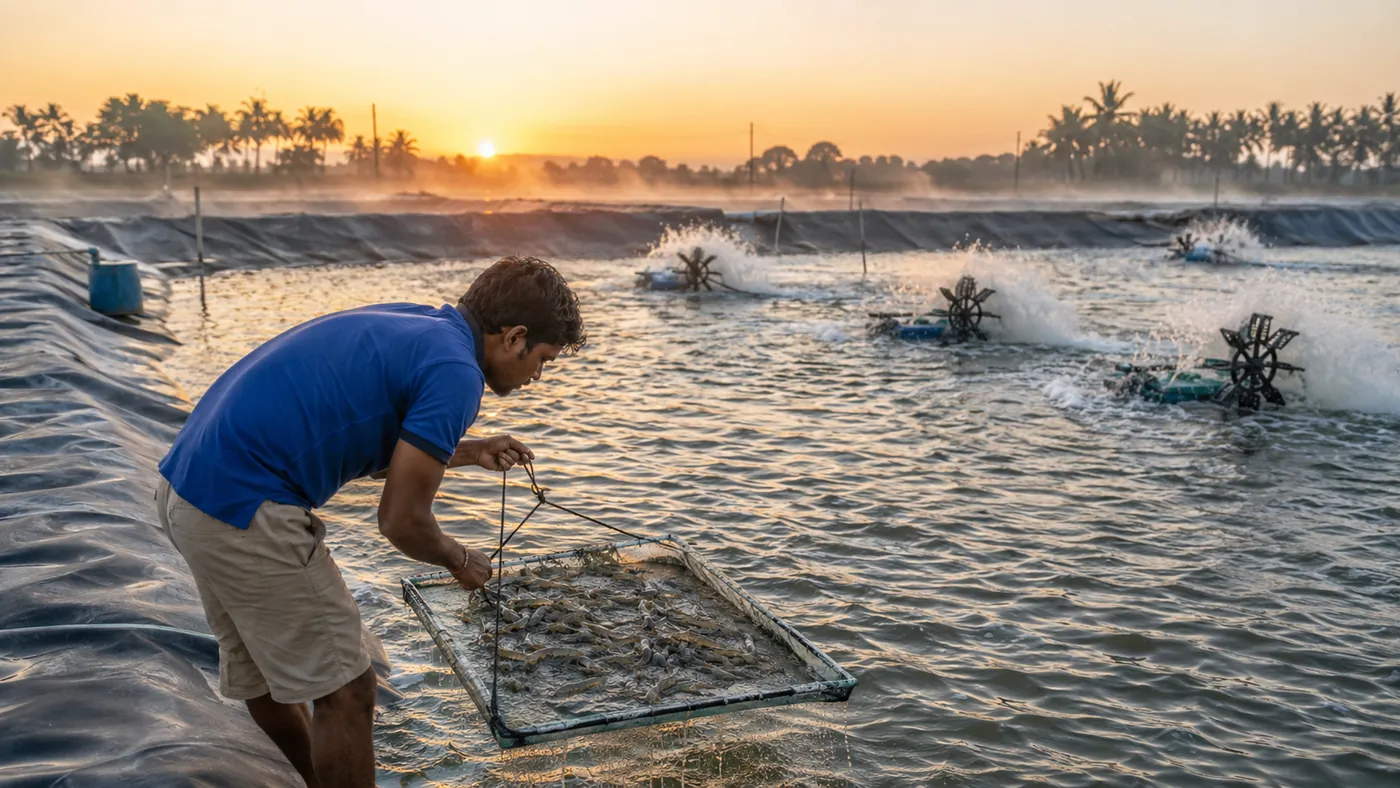
At DOC 26, install 4 standardized 1.0 m² nylon mesh checktrays per hectare, placed 2.5 meters away from the pond dyke in representative clean feeding zones. Allocate exactly 1.0% of the calculated total meal ration across the 4 trays (0.25% per tray).
Begin monitoring checktray clearance at a 2.0-hour inspection interval. If trays are completely clean at 2 hours, the feeding rate is optimal. If unconsumed feed remains, immediately reduce the subsequent feed ration by 20% to prevent bottom souring and Vibrio multiplication.
Inspect checktrays not just for leftover pellets, but for shrimp physical traits: check gut fullness under direct sunlight (100% full dark line indicates healthy feeding), verify clear glassy muscle appearance, and inspect antenna length (broken antennae signal mineral deficiency or high stocking aggression).
4. Phase 4 (DOC 31 to 60): Checktray Feed Adjustments, Biomass Estimation & FCR Control
DOC 31 to 60 is the exponential growth phase where daily biomass increases rapidly from 5.0 g to 14.0–16.0 g. Feed represents over 55% of total production costs; precise feed conversion ratio (FCR) control during this window separates profitable operations from loss-making crops. Feed conversion must be maintained strictly between 1.15 and 1.25.
Transition from 4 meals to 4 or 5 meals daily using 35%–38% crude protein extruded sinking pellets (Pellet #2: 1.2–1.4 mm from DOC 31–45; Pellet #3: 1.6–1.8 mm from DOC 46–60). Allocate feed across daily schedules based on diurnal temperature and metabolic activity: 20% at 06:00, 25% at 11:00, 25% at 16:00, 20% at 20:00, and 10% at 23:30 (or utilize auto-feeders).
Execute systematic cast-net sampling every 7 days (DOC 35, 42, 49, 56) at dawn. Cast minimum 10 throws across all 4 pond quadrants to capture a statistically representative sample of at least 250 shrimp. Calculate Average Body Weight (ABW = Total Sample Weight / Total Shrimp Count), Average Daily Gain (ADG = [ABW_current - ABW_previous] / Days), and estimate total standing pond biomass using current survival benchmarks.
Dynamic Checktray Adjustment Rules (DOC 31 to 60)
Adjust checktray lifting intervals according to shrimp size: 1.5 hours for 6.0 to 12.0 g shrimp, reducing to 1.0 to 1.25 hours for shrimp above 13.0 g. Strictly apply the standard AquaSangham Checktray Adjustment Rule:
• 100% consumed on all 4 trays: Increase subsequent feed ration by 5%. • 1 tray with trace feed (< 5%): Maintain current feed ration unchanged. • 2 or more trays with 10%–20% feed remaining: Reduce next meal by 15% to 20%. • > 30% feed remaining across all trays: Immediately skip the next feeding, run all aerators at maximum capacity, and test bottom water DO, TAN, and nitrite.
| Culture Period (DOC) | Shrimp Body Weight (g) | Pellet Size / Type | Feed % of Body Biomass | Checktray % Allocation | Checktray Lift Interval |
|---|---|---|---|---|---|
| DOC 1 – 15 | 0.01 – 1.0 g | Starter Crumble #0 / #1 | Blind Schedule (1.0–2.5 kg/1L PL) | N/A (Blind Feeding) | N/A |
| DOC 16 – 30 | 1.1 – 4.5 g | Crumble #2 / Pellet #1 (0.8 mm) | 6.5% – 5.0% biomass | 1.0% (DOC 26+) | 2.0 Hours |
| DOC 31 – 45 | 4.6 – 9.5 g | Pellet #2 (1.2 – 1.4 mm) | 4.8% – 3.6% biomass | 1.2% | 1.5 Hours |
| DOC 46 – 60 | 9.6 – 15.0 g | Pellet #3 (1.6 – 1.8 mm) | 3.5% – 2.8% biomass | 1.5% | 1.25 Hours |
| DOC 61 – 80 | 15.1 – 22.0 g | Pellet #3 / #4 (1.8 – 2.0 mm) | 2.7% – 2.2% biomass | 1.8% | 1.0 Hour |
| DOC 81 – 100 | 22.1 – 32.0+ g | Pellet #4 (2.0 – 2.3 mm) | 2.1% – 1.6% biomass | 2.0% | 45 – 60 Minutes |
During extreme heatwaves (water temperature > 33.5°C) or heavy overcast monsoon rainfall, reduce daily feed rations by 30% to 50% automatically. Shrimp metabolism and gastric evacuation drop drastically during atmospheric pressure drops and temperature extremes.
5. Phase 5 (DOC 61 to 85): Mineral Balancing (Ca:Mg:K), Molt Cycles & Sludge Control
From DOC 61 onward, total standing biomass routinely exceeds 4,000 to 7,000 kg per hectare. At these heavy stocking loads, water chemistry parameters fluctuate violently due to massive respiration, daily feeding wastes, and synchronized lunar molt cycles occurring every New Moon (Amavasya) and Full Moon (Purnima).
During synchronized ecdysis (molting), thousands of shrimp shed their chitinous exoskeletons simultaneously, consuming enormous quantities of bioavailable Calcium (Ca²⁺), Magnesium (Mg²⁺), and Potassium (K⁺) ions from the water column within a 4 to 8 hour window. If ionic concentrations are deficient, shrimp suffer from molt-death syndrome, soft-shell syndrome, white muscle cramps, and fatal cannibalism by hard-shelled peers.
Maintain ionic ratios strictly relative to ambient pond salinity using the standard marine stoichiometric formula: Calcium concentration (ppm) = Salinity (ppt) × 11.6; Magnesium concentration (ppm) = Salinity (ppt) × 39.3; Potassium concentration (ppm) = Salinity (ppt) × 10.7. The required Ca : Mg : K ionic ratio must be maintained near 1.0 : 3.4 : 0.9. In low-salinity borewell waters (2 to 8 ppt), fortify pond water 48 hours prior to anticipated lunar molt dates by broadcasting technical grade Magnesium Chloride (MgCl2) @ 50–100 kg/ha, Potassium Chloride (KCl) @ 30–50 kg/ha, and Agricultural Gypsum (CaSO4) @ 100 kg/ha.
Benthic Sludge Oxidation & Central Drain Purging
In intensive earthen and HDPE ponds, uneaten feed, exuviae (molted shells), and fecal matter accumulate in the dead zones of water circulation. Under low dissolved oxygen (< 2.0 ppm at soil-water interface), anaerobic sulfate-reducing bacteria generate lethal unionized hydrogen sulfide gas (H2S), where concentrations as low as 0.01 ppm cause severe gill necrosis and mortality.
Re-align paddlewheel aerators to form a continuous circular vortex that concentrates all benthic debris into the exact center of the pond (the 'central toilet'). If equipped with a central siphon or bottom drainage drain, purge the anaerobic sludge daily for 5 to 10 minutes during the morning aeration rest period. Dose specialized photosynthetic purple non-sulfur bacteria (Rhodobacter & Rhodopseudomonas spp. @ 5 to 10 L/ha) and Paracoccus denitrificans to biologically oxidize H2S and nitrite into non-toxic compounds.
| Salinity (ppt) | Ideal Calcium (Ca²⁺) ppm | Ideal Magnesium (Mg²⁺) ppm | Ideal Potassium (K⁺) ppm | Total Alkalinity Target (ppm CaCO3) |
|---|---|---|---|---|
| 2 ppt (Inland Low) | 23 – 30 ppm | 75 – 85 ppm | 20 – 25 ppm | 140 – 180 ppm |
| 5 ppt (Estuarine) | 55 – 65 ppm | 190 – 205 ppm | 50 – 60 ppm | 130 – 160 ppm |
| 10 ppt (Brackish) | 110 – 125 ppm | 380 – 405 ppm | 105 – 115 ppm | 120 – 150 ppm |
| 15 ppt (Standard) | 165 – 180 ppm | 570 – 600 ppm | 155 – 165 ppm | 120 – 150 ppm |
| 25 ppt (Coastal High) | 280 – 300 ppm | 960 – 1,000 ppm | 260 – 275 ppm | 120 – 140 ppm |
| 35 ppt (Full Seawater) | 400 – 420 ppm | 1,350 – 1,400 ppm | 370 – 390 ppm | 120 – 140 ppm |
Always measure dissolved oxygen at 04:00 AM at the pond bottom (10 cm above sediment), not at midday on the water surface. If bottom DO drops below 4.0 ppm, immediately turn on all auxiliary aerators and broadcast Calcium Peroxide (CaO2) oxygen tablets @ 5.0 kg/ha across feeding zones.
6. Phase 6 (DOC 86 to 100): Final Finishing, Pre-Harvest Fasting, Cold Chain & PHC
The final 15 days of the culture cycle focus on physical finishing, shell hardening, gut depuration, regulatory antibiotic screening, and cold-chain logistics to secure premium export factory pricing. Reaching an average body weight of 30 to 33 grams (30-count) at DOC 95–100 represents the peak financial return per kilogram of feed consumed.
Begin statutory Pre-Harvest Certificate (PHC) compliance testing 12 to 14 days prior to target harvest. Collect random shrimp samples across all ponds and submit them to an MPEDA or EIA-accredited laboratory for Liquid Chromatography-Tandem Mass Spectrometry (LC-MS/MS) screening. Screen for banned pharmacologically active substances: Nitrofuran metabolites (AOZ, AMOZ, AHD, SEM), Chloramphenicol, and Fluoroquinolones (Ciprofloxacin, Enrofloxacin) to ensure complete non-detect status (< 0.1 ppb). A verified clean PHC is mandatory for direct sale to export processing facilities.
To ensure premium visual grade and eliminate muddy off-flavors (geosmin and 2-methylisoborneol produced by Cyanobacteria), perform a 5% to 10% daily water exchange through a bio-filtered reservoir during DOC 90 to 98. Fortify daily feed rations with organic acid acidifiers (coated butyric acid @ 3 g/kg feed) and synthetic Astaxanthin / beta-carotene @ 50 ppm to intensify the natural blue-gray pigmentation and post-cook orange-red coloration demanded by European and Japanese buyers.
Harvest SOP & Pond-Bank Chill Killing Protocol
Coordinate harvest timing strictly outside the lunar molt window (harvest between DOC 3 to 10 days post-molt when 100% of the population exhibits rock-hard exoskeletons). Cease all feeding exactly 6 hours prior to net cast to ensure complete gastric clearance; an empty gut prevents post-harvest enzymatic autolysis and bacterial contamination.
Execute harvesting during night hours (21:00 to 05:00) using continuous bag nets installed on sluice gate discharge culverts or electric cast nets. Immediately upon landing, dump live shrimp into insulated slurry tanks containing a 1:1:1 ice-to-water-to-shrimp slurry maintained at 0°C to 2°C with 50 ppm food-grade Sodium Metabisulfite. This instant chill-kill locks in muscle texture, halts melanosis (black spot formation), and preserves pristine export-grade freshness.
Never harvest shrimp during or immediately after a heavy rainfall event. Salinity drops cause osmotic shock and sudden soft-shell molting. If sudden rain occurs, delay harvest by 48 to 72 hours and dose quicklime @ 100 kg/ha + dolomite @ 150 kg/ha to re-harden shells.
7. Commercial Farm Financial Economics: 1-Hectare 100-Day Cost & Profit Breakdown
Commercial shrimp aquaculture requires disciplined financial tracking and realistic budgeting. Below is an authentic field-verified economic model for a 1.0-hectare semi-intensive earthen pond stocked with 450,000 SPF Litopenaeus vannamei PLs (45 PL/m²), harvested at DOC 98 with an 88% survival rate and an average body weight of 31.5 grams (31.7-count), yielding a total harvest volume of 12,474 kg.
Feed represents the single largest operational expenditure (OPEX) at 56.4% of total costs, followed by electricity and diesel aeration costs (14.2%), SPF seed (11.6%), and pond chemicals/probiotics (9.8%). By maintaining an FCR of 1.21 instead of the regional average of 1.55, this precision protocol saves 4,241 kg of commercial feed—generating an immediate cost saving of ₹3,81,690 in feed alone.
At an average farmgate spot realization of ₹485 per kg for 31-count shrimp on the AquaSangham direct trade desk, gross crop revenue reaches ₹60,49,890. After deducting total operational costs of ₹25,48,000, net farm profit stands at ₹35,01,890 per single 100-day crop cycle.
FCR Impact on 100-Day Profit Realization
The table below illustrates the profound financial leverage of feed conversion efficiency. Every 0.1 reduction in FCR directly adds ₹1.15 Lakhs to ₹1.25 Lakhs in pure profit per hectare while significantly lowering benthic sludge accumulation and organic nitrogen pollution.
| FCR Benchmark | Total Feed Consumed (kg) | Feed Cost @ ₹90/kg (₹) | Total OPEX / Hectare (₹) | Gross Revenue @ ₹485/kg (₹) | Net Farm Profit (₹ / Ha) |
|---|---|---|---|---|---|
| FCR 1.18 (Elite Target) | 14,719 kg | ₹ 13,24,710 | ₹ 24,85,000 | ₹ 60,49,890 | ₹ 35,64,890 |
| FCR 1.21 (Case Study) | 15,093 kg | ₹ 13,58,370 | ₹ 25,48,000 | ₹ 60,49,890 | ₹ 35,01,890 |
| FCR 1.35 (Average Farm) | 16,839 kg | ₹ 15,15,510 | ₹ 27,65,000 | ₹ 60,49,890 | ₹ 32,84,890 |
| FCR 1.55 (Uncalibrated) | 19,334 kg | ₹ 17,40,060 | ₹ 30,80,000 | ₹ 60,49,890 | ₹ 29,69,890 |
| FCR 1.70 (Overfed / Sick) | 21,205 kg | ₹ 19,08,450 | ₹ 33,25,000 | ₹ 60,49,890 | ₹ 27,24,890 |
Use the AquaSangham Live Mandi Spot Desk to compare real-time factory gate offers across Nellore, Bhimavaram, Surat, and Balasore. Direct factory contracts consistently deliver ₹15 to ₹25/kg higher realizations over unorganized local middlemen.
Summary Operational Action Checklist
Frequently Asked Questions
Q: What is the ideal stocking density for Litopenaeus vannamei in semi-intensive earthen ponds?
For standard earthen ponds with mechanical paddlewheel aeration (1.0 HP per 400–500 kg biomass), optimal stocking density ranges from 35 to 60 post-larvae (PL) per square meter (350,000 to 600,000 PL/ha). Intensities above 60 PL/m² in earthen ponds require central sludge drainage systems, continuous bottom diffused aeration, and automated feeding to prevent catastrophic oxygen crashes.
Q: How do I calculate daily feed adjustments based on checktray observations?
Install 4 checktrays per hectare and allocate 1.0% to 1.8% of the total meal ration across the trays. Inspect trays at 1.0 to 1.5 hours: If all trays are 100% clean, increase the next meal by 5%. If trace feed (< 5%) remains, keep the ration unchanged. If 10% to 20% feed remains on multiple trays, cut the next meal by 15% to 20%. If > 30% remains, immediately skip the next feeding and test dissolved oxygen, pH, and ammonia.
Q: How do I prevent mass mortality and soft-shell syndrome during lunar molt cycles?
Synchronized molting occurs during New Moon and Full Moon phases. 48 hours prior to the molt cycle, test total alkalinity (> 130 ppm) and fortify water with Magnesium Chloride (MgCl2 @ 50–100 kg/ha), Potassium Chloride (KCl @ 30–50 kg/ha), and Dolomite (100 kg/ha). Ensure all aerators run continuously through the night to maintain dissolved oxygen above 5.0 ppm as newly molted shrimp exhibit peak oxygen consumption.
Q: Why is a Pre-Harvest Certificate (PHC) mandatory before selling shrimp to processing factories?
Export processing plants exporting to the US, EU, and Japan must comply with international zero-tolerance standards for banned veterinary antibiotics (such as Nitrofuran metabolites and Chloramphenicol). A clean Pre-Harvest Certificate (PHC) issued by an MPEDA/EIA-accredited lab after LC-MS/MS screening verifies the harvest is 100% residue-free, ensuring full contract price realization without distress discounts.
AquaSangham Technical Advisory
Shrimp Aquaculture & Farm Systems Engineering Division
Contributing Senior Technical Writer & Aqua Consultant at AquaSangham.
Recommended Farming Guides
Western Blue Shrimp (Penaeus stylirostris) Intensive Culture: Lessons from New Caledonia
Read Article →Farming TechGreen Tiger Prawn (Penaeus semisulcatus) Culture Protocols for Gulf of Mannar Coastal Ponds
Read Article →Farming TechKuruma Prawn (Penaeus japonicus) Culture in Sandy Substrates: High-Value Export SOP
Read Article →Get Live Farm Advice on AquaSangham Mobile App
Download India's #1 Aquaculture Super App for real-time market prices, precision tools, and community advice.
Download Free Android App