Executive Summary & Key Takeaways
- Macrobrachium malcolmsonii (Godavari River Prawn) is India's premier indigenous freshwater crustacean, exhibiting greater thermal tolerance (19°C–35°C), robust disease resistance against MrNV and IMN, and exceptional consumer appeal compared to exotic or coastal penaeid shrimp.
- Pond polyculture with Indian Major Carps (Catla catla and Labeo rohita) utilizes vertical water column niches efficiently, boosting total harvest biomass by 38% to 45% without competing for food or dissolved oxygen.
- Bottom-feeding carps—specifically Mrigal (Cirrhinus mrigala) and Common Carp (Cyprinus carpio)—must be strictly excluded from prawn polyculture ponds to eliminate substrate disruption, benthic feed competition, and lethal predation on soft-shelled molting prawns.
- Heterogeneous Individual Growth (HIG) and male social dominance (Blue-Claw 'Bull' males vs. Orange-Claw vs. Small males) can severely reduce yields unless mitigated through submerged shelter architecture (200–250 clusters/ha) and phased size-selective cull netting.
- Crustacean feed management requires spatial and temporal segregation: carps are fed floating pellets in open water during daylight, while prawns are fed water-stable, 32% CP sinking pellets along perimeter shallow berms after dusk (65% nightly feeding).
- Beginning selective cull harvests at DOC 110–120 with 65–75 mm mesh drag nets removes dominant Bull males, triggering rapid compensatory growth spurts in subordinate Orange-Claw males and elevating farmgate profit realization to ₹3.20–₹3.90 Lakhs/ha.
Field Case Study: 1.5-Hectare River Canal Polyculture Model
A commercial freshwater farm along the Godavari irrigation canal network transitioned a 1.5-hectare earthen pond from stagnant carp monoculture into an integrated Macrobrachium malcolmsonii polyculture system. Stocking 18,000 acclimated juveniles (3.8 g avg) alongside 900 Catla and 1,800 Rohu fingerlings, the farm strictly eliminated bottom-dwelling Mrigal and Common Carp to reserve the benthic niche exclusively for river prawns. The grower deployed 320 submerged bamboo slat shelters and PVC pyramid clusters to mitigate aggressive cheliped fighting among dominant Bull males. Implementing night-time sinking feed broadcasts (32% CP) along pond perimeter berms and commencing selective cull harvesting with 70 mm drag nets on DOC 115, the farmer cropped 967 kg of high-grade river prawns over four selective cycles before the terminal pond drain at DOC 220. With prawns fetching an average live-gate price of ₹640/kg in Rajahmundry wholesale markets alongside 4,080 kg of fresh carps, the polyculture model yielded a net operating profit of ₹5.52 Lakhs (₹3.68 Lakhs/hectare), representing a 142% profit surge over historical carp monoculture.
1. Biological Profile & Comparative Advantages: M. malcolmsonii vs. M. rosenbergii
The Monsoon River Prawn (Macrobrachium malcolmsonii), historically known across southern and eastern India as the Godavari River Prawn, stands as one of the most biologically resilient and economically lucrative freshwater decapod crustaceans in tropical aquaculture. Indigenous to the perennial riverine, deltaic, and estuarine basins draining the Indian subcontinent—principally the Godavari, Krishna, Mahanadi, Hooghly, and Cauvery river systems—M. malcolmsonii achieves formidable harvest sizes, with alpha males routinely attaining lengths exceeding 240 mm and live weights spanning 90 to 120 grams. For decades, the global freshwater crustacean sector focused almost exclusively on the Giant Freshwater Prawn (Macrobrachium rosenbergii, or Scampi). However, commercial monoculture and polyculture of M. rosenbergii have encountered recurring vulnerabilities across India: catastrophic mortality from Macrobrachium rosenbergii Nodavirus (MrNV) causing White Tail Disease (WTD), Idiopathic Muscle Necrosis (IMN), severe cold-temperature lethargy below 22°C, and aggressive territorial cannibalism resulting in harvest survivals often stagnating between 35% and 50%.
In sharp contrast, Macrobrachium malcolmsonii evolved within the dynamic, turbid, and hydraulically variable river channels of tropical peninsular India. Over millennia of selective environmental pressure, the species acquired superior physiological stamina: an exceptional thermal tolerance envelope (maintaining active benthic grazing and metabolic assimilation between 19°C and 35°C), natural immunity to White Tail Disease, and remarkable osmoregulatory adaptability across freshwater and oligohaline environments (0 to 14 ppt). Furthermore, while both species exhibit social dominance hierarchies among males, M. malcolmsonii displays a more balanced foraging drive and a robust benthic scavenging instinct that allows it to flourish in nutrient-rich earthen carp ponds where organic detritus and benthic micro-invertebrates abound.
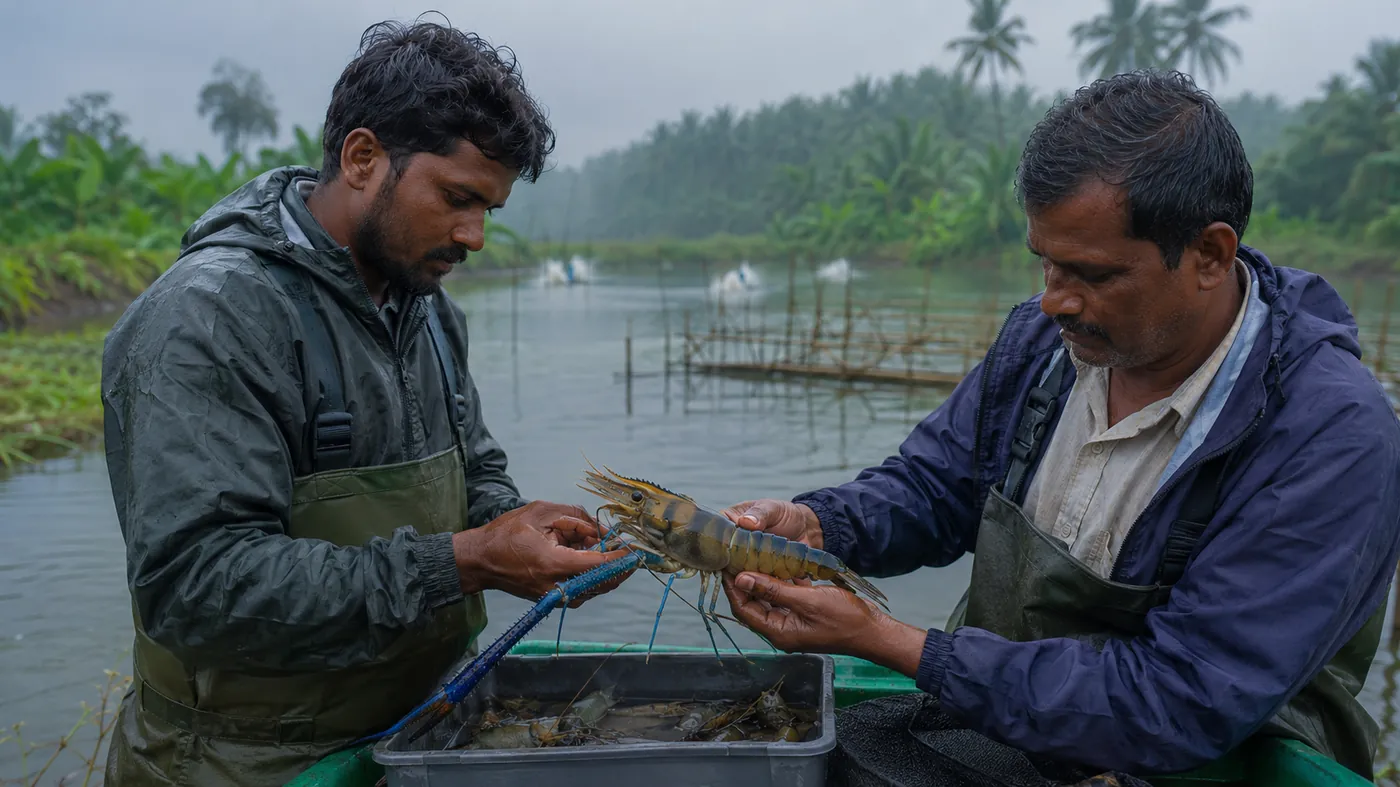
From a taxonomic and anatomical perspective, Macrobrachium malcolmsonii belongs to the family Palaemonidae within the infraorder Caridea. Field diagnosticians readily distinguish M. malcolmsonii from M. rosenbergii through explicit rostral and cheliped morphometrics. The rostrum of M. malcolmsonii is comparatively shorter and stouter, extending only marginally beyond the antennular peduncle, bearing 9 to 11 evenly spaced dorsal teeth (with the anterior 1 or 2 teeth positioned past the orbital margin) and 4 to 6 sharp ventral teeth, lacking the dramatic upward-sweeping sigmoid curve characteristic of rosenbergii. Most strikingly, the second pair of pereiopods (the hypertrophied walking legs modified into pinching chelae) in mature M. malcolmsonii males are exceptionally thick, robustly granulated, and clothed in a dense, velvety pubescence along the mobile dactylus, exhibiting an intense deep cobalt-blue to steel-grey hue. These powerful chelipeds provide the river prawn with extraordinary mechanical leverage for benthic substrate navigation, territorial defense, and crushing hard-shelled molluscan prey.
Ecologically, Macrobrachium malcolmsonii is an amphidromous migratory species. While adult populations spend their somatic lives in inland freshwater rivers, reservoirs, and interconnected canal networks hundreds of kilometers from the ocean, gravid berried females undertake an instinctive downstream spawning migration during the onset of the southwest monsoon (June to October). They release hundreds of thousands of microscopic larvae into coastal brackishwater estuaries where salinities of 10 to 14 ppt are mandatory for zoeal survival and complete metamorphosis across 11 to 12 pelagic stages over a 38-to-50-day larval lifecycle. Following metamorphosis into benthic post-larvae (PL), the juveniles exhibit an intense rheotactic instinct, actively ascending upstream against powerful river currents, scaling irrigation barrages, concrete weirs, and canal regulators to re-colonize inland freshwater habitats. Mastering this biphasic lifecycle through controlled hatchery techniques and dedicated juvenile nursery protocols represents the cornerstone of modern commercial polyculture success.
When purchasing commercial seed stock, always verify morphological authenticity under a stereomicroscope. Genuine Macrobrachium malcolmsonii post-larvae exhibit a straight, non-recurved rostrum with 9-11 dorsal rostral teeth and dark reddish-brown chromatophore banding along the abdominal pleura, whereas M. rosenbergii PL feature a distinctly upturned rostral tip with 11-14 dorsal teeth and longitudinal blue-grey dorsal striping.
2. Two-Stage Nursery Acclimation & Riverine/Hatchery Seed Quarantine
One of the primary historic failure points in commercial freshwater prawn culture has been the direct stocking of delicate hatchery post-larvae (PL15 to PL20, measuring 10 to 14 mm and weighing a mere 12 to 18 mg) directly into expansive, multi-hectare earthen grow-out ponds. In unmanaged pond environments, tender post-larvae face acute osmotic stress, water hardness fluctuations, predation from predatory aquatic hemipterans (backswimmers, water scorpions, dragonfly nymphs), and incidental consumption by resident carps, depressing initial stocking survival below 30%. To eliminate this nursery bottleneck, AquaSangham mandates a standardized two-stage nursery protocol that transitions post-larvae into robust, calcified juveniles weighing 3.0 to 5.0 grams prior to pond release.
Stage 1: Osmotic Weaning and Salinity Dilution Protocol. Because commercial marine or brackishwater hatcheries rear M. malcolmsonii larvae through metamorphosis in salinities of 10 to 14 ppt, post-larvae arrive with gills adapted to hyper-osmotic ionic gradients. Immediate immersion into pure freshwater (0 ppt) induces acute osmotic rupture of the branchial epithelium, cellular lysis, and severe mortality during the subsequent molt. Acclimation must take place over a 72-to-96-hour gradual dilution schedule within aerated nursery holding tanks (5,000 to 10,000 liter capacity) equipped with continuous fine-bubble aeration:
Standard 96-Hour Osmotic Acclimation Timeline
Hour 0 to 24: Maintain seed stock at arrival salinity (10–12 ppt). Feed live Artemia nauplii or fortified micro-encapsulated crustacean diets (45% crude protein, 10% lipid) at 20% biomass daily across 6 rations. Verify active swimming and gut fullness.
Hour 24 to 48: Initiate continuous freshwater drip dilution, reducing tank salinity from 12 ppt down to 6 ppt at an exact, controlled rate of 1.0 ppt every 4 hours. Dose agricultural gypsum (calcium sulfate dihydrate, CaSO4·2H2O) @ 50 mg/L and magnesium chloride (MgCl2) @ 30 mg/L into incoming freshwater to keep total water hardness strictly above 120 mg/L as CaCO3, preventing post-larval molt cramping.
Hour 48 to 72: Continue freshwater dilution from 6 ppt down to 2 ppt (1.0 ppt every 6 hours). Begin transitioning feed from Artemia to a crumbled micro-starter pellet (0.5 mm diameter, 40% CP, 1.2% squid meal, 0.4% cholesterol).
Hour 72 to 96: Dilute water from 2 ppt down to pure freshwater (0.0 to 0.5 ppt). Maintain holding water temperature strictly at 28°C to 30°C, dissolved oxygen > 6.0 mg/L, and pH 7.8 to 8.2. Seed are now fully osmotically adapted to inland freshwater chemistry.
Stage 2: High-Density Nursery Hapa Rearing to 3–5 g Juveniles
Following osmotic stabilization, post-larvae are transferred into sheltered nursery ponds or installed nylon mesh hapas (1.0 mm mesh size, dimensions 10 m × 3 m × 1.2 m water depth) erected on bamboo scaffolding in a well-limed nursery pond. The stocking density is maintained at 150 to 250 PL per square meter. To prevent overcrowding stress and territorial skirmishing, nursery managers must install synthetic shade netting (50% shade factor) cut into pleated curtains or bundles of dried, de-sapped coconut palm fronds suspended at 30 cm intervals throughout the hapa volume. These artificial substrates increase internal three-dimensional crawling surface area by more than 300%.
Nursery ponds are fertilized 10 days prior to stocking using a standardized organic inoculant: 25 kg fermented mustard oil cake slurry, 15 kg rice bran, and 1.5 kg active dried yeast per 1,000 m² to stimulate dense blooms of natural rotifers, cladocerans (Moina and Daphnia), and copepods. Over a 45-to-60-day nursery cycle, juveniles are fed a 38% crude protein crumbled diet at 12% biomass daily for the first 20 days, gradually stepping down to 6% biomass daily by Day 60. By DOC 55–60, post-larvae reach a mean body weight of 3.2 to 4.8 grams, displaying hardened carapaces, vibrant pigment development, and complete limb calcification, achieving nursery survivals consistently surpassing 80% to 85%.
During the nursery phase, never use chlorinated municipal water or raw borewell water with zero dissolved oxygen and toxic iron content. Always age borewell water in a dedicated settling pond for 48 hours with vigorous paddlewheel aeration and dose EDTA disodium salt @ 5 to 8 mg/L to chelate heavy metal ions prior to introducing sensitive post-larvae.
3. Polyculture Ecosystem Architecture: Prawn-Carp Synergies & Benthic Exclusion
The ecological foundation of commercial freshwater polyculture hinges upon precise ecological niche differentiation—fully exploiting the vertical, spatial, and trophic zones of the earthen pond without inducing interspecific competition for food, territory, or dissolved oxygen. In a typical earthen pond with a water depth of 1.2 to 1.5 meters, the aquatic ecosystem is partitioned into three distinct trophic zones: the epipelagic photic zone (surface), the mesopelagic column (mid-water), and the benthic sediment interface (bottom). When species with non-overlapping feeding niches are paired, system efficiency escalates exponentially.
In an optimized Macrobrachium malcolmsonii polyculture pond, Catla catla occupies the surface stratum (0 to 0.5 m depth), utilizing its upturned mouth and delicate gill rakers to filter-feed upon large zooplankton (Daphnia, Cyclops) and suspended floating microalgae. Labeo rohita (Rohu) occupies the mid-water column (0.5 to 1.0 m depth), feeding on periphytic biofilms, filamentous algae, and sinking organic detritus. Macrobrachium malcolmsonii occupies the benthic substrate exclusively (> 1.0 m depth), scavenging unconsumed feed particles, fallen carp fecal matter, benthic chironomid midge larvae, oligochaete worms, and microbial bio-crusts. Prawns actively aerate and turn over the surface sediment through their foraging movements, accelerating organic mineralization and preventing the formation of anaerobic toxic dead zones.
THE CARDINAL RULE: Strict Benthic Exclusion of Competitor Carps. While traditional composite fish culture routinely incorporates Mrigal (Cirrhinus mrigala) and exotic Common Carp (Cyprinus carpio) to graze the pond bottom, both species are strictly incompatible with freshwater prawn polyculture. Cirrhinus mrigala possesses a ventral, inferior mouth structure engineered specifically to scrape benthic detritus and graze epibenthic mud. When stocked with prawns, Mrigal directly monopolizes sinking high-protein crustacean feed and aggressively displaces prawns from feeding areas. Worse, Cyprinus carpio is a vigorous benthic excavator; a single common carp can root 10 to 15 cm deep into the pond bottom clay, generating massive colloidal turbidity that smothers prawn gills and destroys benthic burrows. Furthermore, Common Carp are voracious opportunistic carnivores that aggressively hunt down and consume soft-shelled prawns during their vulnerable molting window. In an M. malcolmsonii pond, the benthic substrate must be dedicated 100% exclusively to the river prawns.
| Production Metric | Traditional IMC Monoculture | Scampi (M. rosenbergii) Polyculture | Monsoon River Prawn (M. malcolmsonii) Polyculture |
|---|---|---|---|
| Prawn Stocking Density | 0 PL/ha (Fish Only) | 10,000 – 15,000 PL/ha | 15,000 – 22,000 PL/ha (Nursed 3-5g) |
| Compatible Fish Species | Catla, Rohu, Mrigal, Grass Carp | Catla, Rohu, Silver Carp (No Bottom Carps) | Catla, Rohu, Grass Carp (Strictly No Bottom Carps) |
| Thermal Tolerance Window | 18°C – 36°C | 22°C – 34°C (Severe stress < 22°C) | 19°C – 35°C (High Sub-Tropical Resilience) |
| Cheliped Morphology & Behavior | N/A | Slender, long blue claws (High territorial wounding) | Thick, granulated blue claws (Aggressive benthic foraging) |
| Shelter / Substrate Requirement | None required | Moderate (80–120 shelters/ha) | Mandatory Intensive (200–250 clusters/ha) |
| Viral Susceptibility (WSSV / MrNV) | Not susceptible | High susceptibility to MrNV & XSV (White Tail) | Zero WSSV susceptibility; High MrNV resistance |
| Average Harvest Size (DOC 210) | N/A (Fish: 1.1–1.4 kg) | 55 – 75 g (Highly skewed HIG) | 60 – 85 g (Bull males up to 110 g with cull harvests) |
| Gross Biomass Yield / Hectare | 2,200 – 2,600 kg (Fish only) | 2,400 kg Fish + 450 kg Scampi | 2,650 kg Fish + 640 kg M. malcolmsonii |
| Farmgate Price Realization | ₹115 – ₹135 / kg (Blended IMC) | ₹480 – ₹580 / kg (Prawns) | ₹550 – ₹720 / kg (Prawns live/chilled gate) |
| Net Operational Profit Margin | ₹1.10 – ₹1.45 Lakhs / ha | ₹2.20 – ₹2.65 Lakhs / ha | ₹3.20 – ₹3.90 Lakhs / ha (+140% to +170% uplift) |
To maximize polyculture synergy, stock Catla catla @ 800–1,000 fingerlings/ha (50–75 g) and Labeo rohita @ 1,500–1,800 fingerlings/ha (40–60 g). If filamentous green algae or submerged aquatic weeds appear, introduce exactly 100–150 Grass Carp (Ctenopharyngodon idella) fingerlings per hectare; Grass Carp will consume weed biomass and defecate partially digested macro-vegetation that enriches benthic detritus for river prawns to consume.
4. Habitat Engineering: Submerged Shelter Design & Male Hierarchy Management
The central biological challenge in cultivating freshwater prawns of the genus Macrobrachium is Heterogeneous Individual Growth (HIG) accompanied by intense male social dominance. Unlike marine penaeid shrimp, where individual size distribution follows a relatively uniform bell-shaped Gaussian curve, male Macrobrachium malcolmsonii populations rapidly segregate into three distinct structural and behavioral morphotypes: Blue-Claw (BC) 'Bull' Males, Orange-Claw (OC) Males, and Small Males (SM). Understanding and manipulating this social caste system is mandatory for commercial scale.
The Blue-Claw (BC) 'Bull' Male is the dominant terminal morphotype. Possessing massive, heavily granulated cheliped claws that can exceed twice the length of its body, the Bull male claims a physical territory spanning 3 to 5 square meters of pond bottom. Bull males secrete chemical and visual dominance cues that physiologically suppress the molting frequency and somatic growth of nearby Orange-Claw and Small males. Furthermore, during ecdysis (the molting process), any prawn shedding its exoskeleton is soft, immobilized, and emits chemical alarm cues for several hours until cuticular sclerotization occurs. In an un-structured, flat pond bottom, Bull males relentlessly hunt down and cannibalize soft-shelled cohorts, drastically reducing pond survival.
To shatter territorial dominance and provide absolute physical protection during ecdysis, farm engineers must execute Submerged Habitat Architecture across the entire pond bed. By installing three-dimensional vertical and modular artificial substrates, farmers expand the effective benthic living surface area by 120% to 150%, allowing subordinate males and molting females to graze, molt, and calcify in safety:
Modular Shelter Construction Specifications
1. PVC Pipe Pyramid Clusters: Cut commercial 3-inch (75 mm) and 4-inch (100 mm) unplasticized PVC drainage pipes into 40 cm lengths. Bind them tightly using heavy-duty ultraviolet-stabilized nylon twine into triangular pyramids containing 6 pipes (3-2-1 base configuration). Weight the base of each cluster with a cured clay brick or concrete cylinder. Deploy 120 to 150 pyramid clusters per hectare, distributed uniformly along the pond bottom at 8-to-10-meter grid intervals.
2. Treated Bamboo Slat Grids: Construct three-dimensional lattice frames using split, de-sapped bamboo poles (50 mm width, 1.5 m length) spaced 10 cm apart. Fasten two horizontal tiers separated by 20 cm vertical risers, anchored to the pond bottom with wooden stakes. Bamboo provides natural periphyton attachment surfaces where prawns can browse microbial biofilms while hiding within the interstitial recesses.
3. Suspended Polypropylene Netting Folds: Roll discarded agricultural shade netting or monofilament gill netting into loose, corrugated sausage bundles (2 meters long, 30 cm diameter) anchored 15 cm above the mud line using stone weights and float lines. These dense, flexible netting folds create thousands of microscopic hiding cavities where soft-shelled post-molt prawns can wedge themselves away from predatory Bull male pincers.
Never use green or freshly cut bamboo without thorough seasoning. Fresh bamboo leaches toxic sap and acidic tannins into the pond water, consuming dissolved oxygen and depressing pH. Always submerge cut bamboo in clean flowing irrigation water for 21 days or sun-cure it for 30 days until dry and golden-tan before deploying into aquaculture ponds.
5. Precision Nutritional Formulations & Dual-Zone Benthic Feeding Management
Feed represents the largest recurring operational expenditure in polyculture, accounting for 54% to 62% of direct production costs. The critical operational objective in a prawn-carp polyculture system is Dual-Zone Feeding Segregation: ensuring that energetic, fast-swimming pelagic carps satisfy their nutritional demands with low-cost floating feed in the upper water column during daylight hours, while benthic river prawns receive their specialized, water-stable, nutrient-dense sinking feed undisturbed along the pond margins after nightfall.
Nutritional Specifications for Macrobrachium malcolmsonii. Unlike marine penaeid shrimp that require high levels of marine fishmeal (often 25%–35%), freshwater river prawns possess robust digestive enzymatic suites (elevated trypsin, chymotrypsin, amylase, and cellulase activity) allowing efficient utilization of plant proteins and complex carbohydrates. However, because crustaceans cannot synthesize the steroid ring de novo, the formulated diet must provide bioavailable cholesterol, phospholipids, and essential n-3/n-6 highly unsaturated fatty acids (HUFAs) to sustain frequent ecdysis and muscle accretion:
Nutritional Matrix for Commercial River Prawn Grower Pellets
Crude Protein (CP): 30.0% to 32.0% (minimum 12% marine protein derived from steamed fishmeal, squameal, and krill meal; 18% plant protein from high-protein de-hulled soybean meal and corn gluten).
Crude Lipid: 6.0% to 7.5% (blended 50:50 marine fish oil and cold-pressed soybean oil, fortified with 1.2% de-oiled soybean lecithin to supply essential phosphatidylcholine).
Crude Fiber: 3.5% to 4.5% (controlled fiber aids gut peristalsis and chitin digestion without polluting sediment).
Dietary Cholesterol: 0.35% to 0.50% (mandatory precursor for 20-hydroxyecdysone molt hormone synthesis).
Calcium to Phosphorus Ratio: Strictly 1.4:1 to 1.6:1 (Available Phosphorus > 1.1%, Calcium 1.5%–1.8% using monocalcium phosphate and dicalcium phosphate to support post-molt cuticular hardening).
Water Stability & Binder Technology: Pellets must remain completely intact under water for a minimum of 3.5 to 4.0 hours without leaching nutrients or dissolving into silt. Formulations must utilize 2.0% to 2.5% modified pre-gelatinized wheat starch or carboxymethyl cellulose (CMC) binders, produced via single-screw or twin-screw extrusion conditioning.
Dual-Zone Spatial & Nocturnal Feeding Protocol
Pelagic Fish Feeding Window: Carps are fed twice daily—at 08:30 hrs and 15:30 hrs—using commercial floating extruded pellets (24% to 26% CP, 1.2 to 2.5 mm size) broadcast exclusively across the central open water area of the pond at 2.0% to 2.5% of estimated fish biomass. Feeding floating pellets in the pond center conditions the carps to associate daylight hours and surface waters with feeding, preventing them from grazing along the bottom edges.
Prawn Benthic Feeding Window: Macrobrachium malcolmsonii is an obligate nocturnal scavenger whose foraging peaks in total darkness between 20:00 and 03:00 hrs. Prawn sinking pellets (2.0 to 2.5 mm diameter) are broadcast exclusively along the pond perimeter shelves and marginal dyke berms (where water depth is 0.8 to 1.1 meters) after dusk. Exactly 65% of the daily prawn feed ration is distributed at 19:45–20:15 hrs, and the remaining 35% is broadcast at pre-dawn (04:45–05:15 hrs).
Checktray Monitoring & Dosage Adjustment: Deploy four submerged checktrays (80 cm × 80 cm galvanized iron square frames with 1.0 mm nylon mesh) per hectare along the perimeter feeding berms. Place 1.5% of the scheduled night feed ration evenly into the trays during the 20:00 broadcast. Check the trays exactly 2.5 hours later using a hand spotlight. If feed is 100% consumed within 2 hours, increase the subsequent night ration by 5%; if 10% to 15% uneaten feed remains, reduce the ration by 15% to safeguard water chemistry.
During full moon phases (Purnima) and the subsequent 48 hours, Macrobrachium malcolmsonii experiences mass molting peaks. Reduce daily prawn feed rations by 25% to 30% on the night of the full moon because soft-shelled prawns cease feeding for 12 to 18 hours. Top-dress feed 3 days post-molt with coated Calcium Butyrate @ 3 g/kg and Vitamin C (ascorbyl phosphate) @ 2 g/kg to accelerate cuticular calcification.
6. Water Chemistry, Soil Liming & Monsoon Hydraulic Management
Maintaining strict limnological equilibrium in freshwater polyculture ponds is paramount. Unlike marine shrimp that benefit from the natural buffering capacity of oceanic seawater (which boasts total alkalinity exceeding 140 mg/L and abundant mineral salts), inland freshwater ponds fed by monsoon runoff or river irrigation canals are highly susceptible to sudden ionic imbalances, severe drop in pH, and mineral depletion.
Water Quality Benchmark Envelope for Macrobrachium malcolmsonii:
- Water Temperature: Optimum 28°C to 32°C. Growth slows significantly below 24°C; feeding activity ceases below 18°C. Upper thermal threshold is 35.5°C.
- Dissolved Oxygen (DO): Minimum critical threshold is 4.0 mg/L; optimum 5.2 to 7.0 mg/L. Unlike carps that can gulp atmospheric air at the surface, benthic river prawns cannot surface-breathe and will suffocate or crawl out onto dyke banks if bottom DO drops below 2.0 mg/L.
- Water pH: 7.6 to 8.4. Diurnal pH swings between morning (06:00) and late afternoon (16:00) must not exceed 0.6 units to prevent chronic osmotic stress.
- Total Alkalinity: 120 to 160 mg/L as CaCO3. Alkalinity below 80 mg/L severely impairs cuticular calcification, leading to soft-shell syndrome and post-molt cannibalism.
- Total Hardness: 100 to 180 mg/L as CaCO3. Calcium concentration must exceed 45 mg/L, with Magnesium maintained above 18 mg/L.
- Un-ionized Ammonia (NH3-N): Strictly < 0.03 mg/L. At pH levels above 8.5, non-toxic ammonium (NH4+) rapidly converts into lethal un-ionized ammonia gas.
- Nitrite (NO2-N): Strictly < 0.10 mg/L. Nitrite oxidizes prawn hemocyanin into non-functional meta-hemocyanin, causing internal asphyxiation.
- Benthic Redox Potential (Eh): Must remain positive or above -100 mV. Deep black sediment with Eh below -150 mV generates lethal hydrogen sulfide (H2S), which must remain undetectable (< 0.005 mg/L).
Soil Liming Schedule & Sediment Conditioning
To maintain active sediment buffering and prevent benthic acidification, implement an alternating bi-weekly liming regimen: On the 1st and 15th of each month, broadcast Agricultural Limestone (calcium carbonate, CaCO3 @ 120 mesh) @ 150 kg/ha directly along the marginal feeding berms. On the 8th and 22nd of each month, broadcast Dolomite (CaMg(CO3)2) @ 100 kg/ha to supply bioavailable magnesium ions. Never apply quicklime (CaO) or hydrated lime (Ca(OH)2) into water populated by prawns, as the resultant exothermic reaction and lethal pH spike (> 10.0) causes gill destruction and instant mass mortality.
Aeration Dynamics and Sludge Sweeping: Install 4 HP of long-arm paddlewheel aeration per hectare. Aerators should be operated during pre-dawn hours (01:30 to 06:30 hrs) when photosynthetic oxygen production has vanished. Position aerators in a directional circular configuration to generate an inward hydraulic current. This gentle water movement sweeps loose carp feces, shed molts, and organic debris into a concentrated mound in the deepest central bowl of the pond, leaving the peripheral perimeter berms (the prawn feeding grounds) clean, well-oxygenated, and free of toxic anaerobic sludge.
Managing Monsoon Turbidity and Siltation Inflows
During the southwest and northeast monsoon seasons, river irrigation canals run red with heavy suspensions of colloidal clay, silt, and dissolved organic matter. While adult M. malcolmsonii tolerate riverine turbidity, pond secchi disc transparency plunging below 20 cm blocks sunlight penetration, collapses phytoplankton blooms, and causes sudden bottom anoxia. Furthermore, colloidal silt particles adhere to post-larval gill lamellae, causing mechanical clogging and secondary bacterial gill rot (Flavobacterium and Aeromonas infections).
To remediate colloidal turbidity without altering pond water pH, broadcast Agricultural Gypsum (CaSO4·2H2O) @ 250 to 400 kg/ha dissolved in canal intake water. The bivalent calcium ions (Ca2+) neutralize the negative electrostatic charges on suspended clay platelets, inducing rapid flocculation and clearing water transparency back to an optimal 35 to 40 cm secchi depth within 48 to 72 hours. Simultaneously, maintain pond dikes with vetiver grass or turf to prevent earthen dyke erosion during torrential tropical monsoon squalls.
If prolonged overcast monsoon storms suppress sunlight for 4-5 consecutive days, natural microalgae will die off rapidly, causing a sharp drop in dissolved oxygen and an alkalinity crash. Proactively dose Sodium Bicarbonate (NaHCO3) @ 40 kg/ha into the aerator wash to stabilize bicarbonate reserve, and broadcast granulated sodium percarbonate (emergency oxygen powder) @ 10 kg/ha along benthic feeding berms at 02:00 hrs.
7. Phased Cull Harvesting Protocols & Multi-Crop Farmgate Economics
The crowning operational protocol that transforms Macrobrachium malcolmsonii polyculture from a marginally profitable enterprise into an ultra-high-margin commercial agribusiness is Phased Size-Selective Cull Harvesting (intermittent cropping), rather than waiting for a single terminal drain harvest. In traditional carp monoculture, farmers drain the pond once after 10 to 12 months. However, if freshwater prawns are left unharvested until the terminal pond drain, the dominant Blue-Claw Bull males monopolize the benthic territory, and their pheromonal and behavioral dominance keeps 60% to 70% of the remaining male population permanently stunted as subordinate Orange-Claw and Small males. Overall harvest yields suffer, and average prawn sizes remain depressed.
Selective Cull Netting Protocol: Beginning at Day of Culture (DOC) 110 to 120, when the earliest Bull males achieve prime commercial weights of 65 to 80 grams, the farm initiates monthly cull netting operations. Deploy a specialized knotless nylon drag seine net (50 m length, 2.5 m depth) fabricated with a stretched mesh size of 65 mm to 75 mm (2.5 to 3.0 inches). This precise mesh aperture captures the large, heavy-bodied Bull males and oversized berried females, while permitting smaller Orange-Claw males, Small males, immature females, and fast-swimming carp fingerlings to slip through the mesh completely unharmed.
The Compensatory Growth Surge: The physical removal of dominant Bull males creates an immediate biological vacuum in the benthic social order. Within 7 to 14 days of cull harvesting, the largest, most robust Orange-Claw males undergo metamorphic molts, transforming into new Blue-Claw Bull males. Freed from social inhibition, these prawns exhibit dramatic compensatory growth spurts, surging in body mass by 35% to 50% in a single 25-day molt cycle. Repeating this selective cull harvest every 21 to 28 days (4 to 5 selective cull cycles between DOC 120 and DOC 220) allows the farmer to crop multiple cohorts of massive, premium-grade river prawns throughout the season.
Terminal Pond Drain (DOC 210–240): At the conclusion of the 7-to-8-month production cycle, the pond water is systematically pumped down through a collection sump fitted with a 10 mm mesh exit trap. All remaining carps (Catla averaging 1.2 to 1.5 kg, Rohu averaging 850 g to 1.1 kg) and late-maturing prawns are harvested in pristine condition.
Comparative Financial Balance Sheet: Carp Monoculture vs. M. malcolmsonii Polyculture (Per Hectare)
Capital and Operational Expenditure Breakdown (1 Hectare Earthen Pond, 220 Days Culture):
- Pond Preparation, Bleaching & Soil Conditioning: ₹35,000 (both models).
- Seed Input Costs: Carp Monoculture: 4,500 IMC fingerlings @ ₹8/ea = ₹36,000. Polyculture Model: 2,700 IMC fingerlings @ ₹8/ea (₹21,600) + 18,000 Nursed M. malcolmsonii juveniles (3–5 g) @ ₹3.80/ea (₹68,400) = ₹90,000.
- Feed Costs: Carp Monoculture: 3,800 kg commercial floating feed @ ₹42/kg = ₹1,59,600. Polyculture Model: 3,200 kg carp floating feed (₹1,34,400) + 950 kg specialized 32% CP sinking prawn feed @ ₹74/kg (₹70,300) = ₹2,04,700.
- Electricity, Paddlewheel Aeration & Fuel: Carp Monoculture: ₹32,000. Polyculture Model: ₹58,000 (higher night aeration demand).
- Labor, Substrate Installation & Probiotics: Carp Monoculture: ₹28,000. Polyculture Model: ₹48,000.
Total Operating Expenditure: Carp Monoculture = ₹2,90,600. Polyculture Model = ₹4,35,700.
Gross Revenue Realization:
- Carp Monoculture Yield: 3,100 kg mixed carps @ ₹125/kg average farmgate price = ₹3,87,500 Gross Revenue. Net Profit = ₹96,900 / hectare.
- Polyculture Yield: 2,650 kg mixed carps @ ₹125/kg = ₹3,31,250. PLUS 640 kg high-grade M. malcolmsonii (harvested across 4 cull cycles + final drain) sold live/chilled at premium farmgate price of ₹650/kg = ₹4,16,000. Total Gross Revenue = ₹7,47,250.
Net Operational Profit Realization: Polyculture Net Profit = ₹7,47,250 - ₹4,35,700 = ₹3,11,550 / hectare.
Financial Bottom Line: Integrating Macrobrachium malcolmsonii into an existing carp farming operation delivers an incremental net profit uplift of ₹2,14,650 per hectare (+221% net profit expansion), insulating the producer against stagnant fish commodity prices while generating cash flow through monthly cull sales.
Always market live Macrobrachium malcolmsonii rather than dead chilled prawns whenever possible. Live river prawns transported in aerated transport tanks to metropolitan seafood restaurants in Hyderabad, Vijayawada, Bhubaneswar, or Kolkata command a 25% to 35% cash premium (₹750 to ₹900/kg) over ice-packed prawns, unlocking unmatched farmgate realizations.
Summary Operational Action Checklist
Frequently Asked Questions
Q: How does Macrobrachium malcolmsonii differ commercially and biologically from Macrobrachium rosenbergii (Scampi)?
While both species are large freshwater palaemonid prawns, Macrobrachium malcolmsonii (the Godavari River Prawn) possesses several distinct advantages for Indian pond culture. M. malcolmsonii exhibits superior thermal stamina, maintaining active foraging and growth at 19°C to 24°C where M. rosenbergii becomes severely lethargic. Biologically, M. malcolmsonii displays complete natural resistance to Macrobrachium rosenbergii Nodavirus (MrNV), the causative pathogen of White Tail Disease that has devastated scampi hatcheries. Anatomically, M. malcolmsonii features a shorter, less upturned rostrum (9-11 dorsal teeth) and substantially thicker, heavily granulated, velvety blue chelae that provide superior grasping power compared to the long, slender, brittle pincers of rosenbergii. In domestic wholesale markets across southern and eastern India, malcolmsonii is celebrated for sweet meat flavor and firm abdominal texture, commanding premium live-gate prices of ₹550 to ₹720/kg.
Q: Why is it strictly prohibited to stock Mrigal or Common Carp in a river prawn polyculture pond?
Cirrhinus mrigala (Mrigal) and Cyprinus carpio (Common Carp) are obligate bottom dwellers that compete directly with Macrobrachium malcolmsonii for spatial territory and food. Both carp species possess sub-terminal mouths designed to rummage through benthic mud, consuming the high-cost, high-protein sinking pellets intended for prawns. Furthermore, Common Carp are aggressive excavators that dig up to 15 cm into pond sediment, generating severe colloidal clay turbidity that clogs prawn gills and collapses phytoplankton blooms. Crucially, Common Carp are opportunistic carnivores; when prawns undergo ecdysis (molting) and are completely soft and defenseless, Common Carp aggressively hunt and ingest them, reducing prawn pond survival to catastrophic lows (< 25%). In polyculture, bottom fish must be omitted completely, restricting carps to surface-feeding Catla and column-browsing Rohu.
Q: What causes Heterogeneous Individual Growth (HIG) in male river prawns and how does cull harvesting overcome it?
Heterogeneous Individual Growth (HIG) is a socially mediated biological phenomenon in Macrobrachium crustaceans where males of identical age differentiate into three distinct morphotypes: dominant Blue-Claw (BC) 'Bull' males, intermediate Orange-Claw (OC) males, and stunted Small Males (SM). Bull males aggressively defend large benthic territories and release chemical/behavioral cues that suppress the molting frequency and somatic growth of subordinate cohorts. If the pond is left unharvested until a single final drain, only the early Bull males reach large sizes while the rest remain stunted. Phased Cull Harvesting overcomes HIG by deploying 65–75 mm mesh drag nets every 21–28 days starting at DOC 110–120. This selectively removes the large Bull males, removing social inhibition and prompting Orange-Claw males to undergo rapid metamorphic molts with explosive 35% to 50% compensatory growth bursts.
Q: How can farmers manage river water siltation and clay turbidity during the heavy monsoon season?
During the monsoon, river canal inflows carry heavy loads of suspended colloidal clay and silt. While adult river prawns tolerate moderate turbidity, secchi disc visibility dropping below 20 cm suffocates phytoplankton blooms, induces bottom anoxia, and clogs delicate post-larval gill filaments with fine silt. To clear colloidal clay without altering pH or harming stock, broadcast Agricultural Gypsum (calcium sulfate dihydrate, CaSO4·2H2O) @ 250 to 400 kg/ha directly into the canal intake mixing zone. The divalent calcium ions (Ca2+) neutralize the negative electrostatic surface charges of suspended clay platelets, causing them to flocculate and settle rapidly, restoring optimum water clarity (35–40 cm) within 48 to 72 hours.
Q: Can Macrobrachium malcolmsonii be cultured in inland brackishwater or saline borewell ponds?
Macrobrachium malcolmsonii is an amphidromous species whose larval stages require brackishwater (10 to 14 ppt) for embryonic hatching and zoeal development. However, during the juvenile and adult grow-out phase, M. malcolmsonii thrives best in freshwater to oligohaline environments (0.0 to 4.0 ppt salinity). While adult prawns can tolerate salinities up to 10–12 ppt for brief intervals, prolonged culture in salinities above 6.0 ppt suppresses somatic growth, increases osmoregulatory energy expenditure, and promotes premature sexual maturation at smaller sizes. For inland saline or brackishwater ponds (8 to 25 ppt), farmers should cultivate penaeid species such as Penaeus indicus or Penaeus monodon rather than M. malcolmsonii.
AquaSangham Technical Advisory
Freshwater Crustacean & Polyculture Systems Desk
Contributing Senior Technical Writer & Aqua Consultant at AquaSangham.
Recommended Farming Guides
Total Ammonia Nitrogen (TAN) Mass Balance Math: Sizing Biofilters in Commercial RAS
Read Article →Farming TechThe Recirculating Aquaculture System (RAS) Master Guide: Design, Hydraulics & Mass Balance
Read Article →Farming TechIndigenous Magur (Clarias batrachus) Induced Breeding & Nursery Rearing SOPs
Read Article →Get Live Farm Advice on AquaSangham Mobile App
Download India's #1 Aquaculture Super App for real-time market prices, precision tools, and community advice.
Download Free Android App